One approach to organic synthesis is retrosynthetic analysis. With this approach chemists start with the structures of their target molecules and progressively cut bonds to create simpler molecules. Reversing this process gives a synthetic route to the target molecule from simpler starting materials. This "disconnection" approach to synthesis is now a fundamental part of every organic synthesis course.
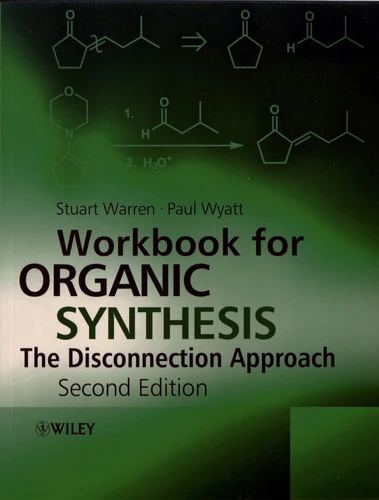
Workbook for Organic Synthesis : The Disconnection Approach, 2nd Edition This workbook provides a comprehensive graded set of problems to illustrate and develop the themes of each of the chapters in the textbook Organic Synthesis : The Disconnection Approach, 2nd Edition. Each problem is followed by a fully explained solution and discussion. The examples extend the student's experience of the types of molecules being synthesised by organic chemists, and the strategies they employ to control their syntheses.
By working through these examples students will develop their skills in analysing synthetic challenges, and build a toolkit of strategies for planning new syntheses. Examples are drawn from pharmaceuticals, agrochemicals, natural products, pheromones, perfumery and flavouring compounds, dyestuffs, monomers, and intermediates used in more advanced synthetic work. Reasons for wishing to synthesise each compound are given.
One approach to organic synthesis is retrosynthetic analysis. With this approach chemists start with the structures of their target molecules and progressively cut bonds to create simpler molecules. Reversing this process gives a synthetic route to the target molecule from simpler starting materials. This "disconnection" approach to synthesis is now a fundamental part of every organic synthesis course.
Workbook for Organic Synthesis : The Disconnection Approach, 2nd Edition This workbook provides a comprehensive graded set of problems to illustrate and develop the themes of each of the chapters in the textbook Organic Synthesis : The Disconnection Approach, 2nd Edition. Each problem is followed by a fully explained solution and discussion. The examples extend the student's experience of the types of molecules being synthesised by organic chemists, and the strategies they employ to control their syntheses.
By working through these examples students will develop their skills in analysing synthetic challenges, and build a toolkit of strategies for planning new syntheses. Examples are drawn from pharmaceuticals, agrochemicals, natural products, pheromones, perfumery and flavouring compounds, dyestuffs, monomers, and intermediates used in more advanced synthetic work. Reasons for wishing to synthesise each compound are given.