SOLDES
Jusqu'à -70% sur une sélection d'articles*

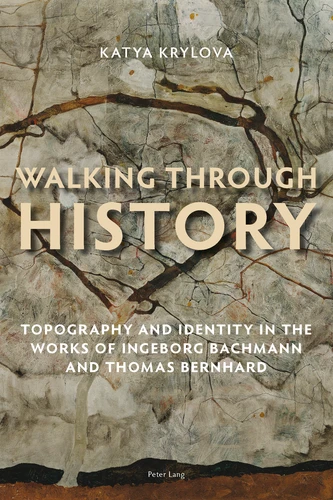
Walking Through History. Topography and Identity in the Works of Ingeborg Bachmann and Thomas Bernhard
Par :Formats :
- Paiement en ligne :
- Livraison à domicile ou en point Mondial Relay estimée à partir du 18 novembreCet article sera commandé chez un fournisseur et vous sera envoyé 127 jours après la date de votre commande.
- Retrait Click and Collect en magasin gratuit
- Livraison à domicile ou en point Mondial Relay estimée à partir du 18 novembre
- Réservation en ligne avec paiement en magasin :
- Indisponible pour réserver et payer en magasin
- Nombre de pages274
- ISBN978-3-0343-0845-8
- EAN9783034308458
- Date de parution01/10/2012
- ÉditeurPeter Lang
Résumé
This book was the winner of the 2011 Peter Lang Young Scholars Competition in German Studies. The post-war landscape of Europe is unthinkable without the voices of the Austrian writers Ingeborg Bachmann (1926–1973) and Thomas Bernhard (1931–1989). Their work, coming after the devastation wrought by the Second World War and the Holocaust, is rooted in a specifically Austrian context of repression of this traumatic historical legacy.
In post-war Austria, discourse on the recent past may have been dominated by silence, but the legacy of this past was all too apparent in the country's ruined and speedily reconstructed cityscapes. This book investigates Bachmann's and Bernhard's treatment of two fundamental aspects of the Austrian historical legacy : the trauma of the war and the desire to return to an ideal homeland, known as ‘Haus Österreich'.
Following a methodology based on Freud and Benjamin, this comparative study demonstrates that the confrontation with Austria's troubled history occurs through the protagonists' ambivalent encounter with the landscape or cityscape that they inhabit, travel or return to. The book demonstrates the centrality of topography on both thematic and structural levels in the authors' prose works, as a mode of confronting the past and making sense of the present.
In post-war Austria, discourse on the recent past may have been dominated by silence, but the legacy of this past was all too apparent in the country's ruined and speedily reconstructed cityscapes. This book investigates Bachmann's and Bernhard's treatment of two fundamental aspects of the Austrian historical legacy : the trauma of the war and the desire to return to an ideal homeland, known as ‘Haus Österreich'.
Following a methodology based on Freud and Benjamin, this comparative study demonstrates that the confrontation with Austria's troubled history occurs through the protagonists' ambivalent encounter with the landscape or cityscape that they inhabit, travel or return to. The book demonstrates the centrality of topography on both thematic and structural levels in the authors' prose works, as a mode of confronting the past and making sense of the present.