
Giulio Dalvit is Associate Curator at The Frick Collection. He has held fellowship, lecture, and research positions at the Courtauld Institute of Art, University College London (UCL), the Museo Poldi Pezzoli, the I{unsthistorisches Institut in Florence, and the University of Amsterdam. His research has appeared in The Burlington Magazine, Art History, and the journal of the Warburg and Courtauld Institutes, among others, as well as in books and exhibition catalogues.
Vecchietta
Par :Formats :
- Nombre de pages352
- FormatBeau Livre
- PrésentationRelié
- Poids1.956 kg
- Dimensions24,5 cm × 28,5 cm × 3,3 cm
- ISBN978-1-913645-94-6
- EAN9781913645946
- Date de parution21/11/2025
- ÉditeurPaul Holberton Publishing
Résumé
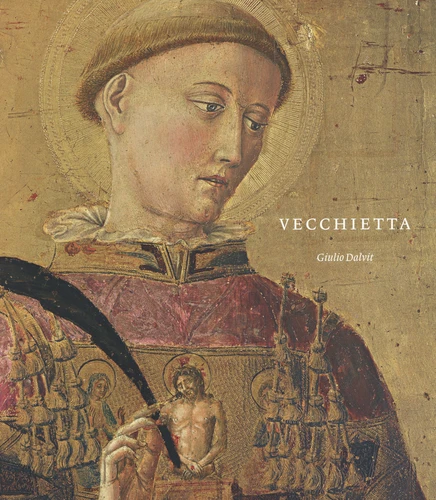
This is the first book since 1937 devoted to the Sienese artist Lorenzo di Pietro - known as Vecchietta (1410-1480) - a towering figure in Italian art of what is commonly called the Early Renaissance. Included is a wealth of new scholarship and archival material, as well as extensive new photography. Vecchietta was a painter, sculptor, architect, and goldsmith, and his diverse oeuvre and long life provide a lens through which to re-evaluate the art of Quattrocento Siena, traditionally misinterpreted as subsidiary to Florence.
He had an immensely successful practice - in Siena, Lombardy, and perhaps Rome - counting among his patrons such eminent figures as Cardinal Branda Castiglioni and Pope Pius II. Vecchietta is credited with innovations in style and technique that led the way for the accomplishments of the next generation of Sienese artists (most of whom trained in his workshop), among them, Francesco di Giorgio Martini.
Among the questions addressed in the book are the following : How was art made in places other than Florence before art had a history, before Vasari set new criteria to interpret it ? How did a polymath artist work outside the Florentine tradition of disegno ? A monographic focus on Vecchietta represents an opportunity to tackle these questions, and many more, whose answers have significance beyond the locality of fifteenth-century Siena.
He had an immensely successful practice - in Siena, Lombardy, and perhaps Rome - counting among his patrons such eminent figures as Cardinal Branda Castiglioni and Pope Pius II. Vecchietta is credited with innovations in style and technique that led the way for the accomplishments of the next generation of Sienese artists (most of whom trained in his workshop), among them, Francesco di Giorgio Martini.
Among the questions addressed in the book are the following : How was art made in places other than Florence before art had a history, before Vasari set new criteria to interpret it ? How did a polymath artist work outside the Florentine tradition of disegno ? A monographic focus on Vecchietta represents an opportunity to tackle these questions, and many more, whose answers have significance beyond the locality of fifteenth-century Siena.