

Richard T. T. Forman is Harvard University's Professor of Advanced Environmental Studies in Landscape Ecology. Previously at the University of Wisconsin and Rutgers University, he is an American Association for the Advancement of Science Fellow and recipient of the Lindback Award for Teaching Excellence as well as of honorary degrees and medals in the USA and internationally.
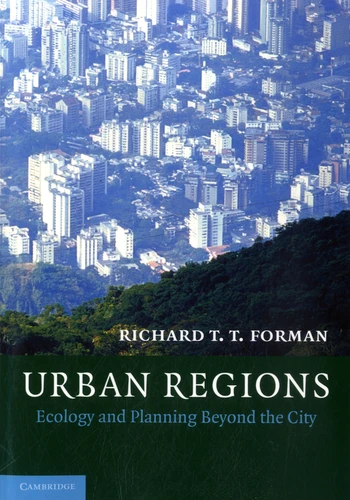
Urban Regions. Ecology and Planning Beyond the City
Par :Formats :
- Nombre de pages434
- FormatGrand Format
- PrésentationBroché
- Poids0.89 kg
- Dimensions17,1 cm × 24,5 cm × 2,3 cm
- ISBN978-0-521-67076-0
- EAN9780521670760
- Date de parution01/01/2008
- ÉditeurCambridge University Press
- PréfacierAlan A Altshuler
- PréfacierSteward Pickett
Résumé
Natural systems and their human uses are of central importance in urban regions, where diverse greenspaces and built spaces of essentially equal value spatially intertwine. With land planning, socioeconomics, and natural systems as foundations, this book combines urban planning and ecological science in examining urban regions. Writing for graduate students, academic researchers, planners, conservationists, and policy makers, and with the use of informative urban-region color maps, Richard Forman compares 38 urban regions from 32 nations, including London, Chicago, Ottawa, Brasilia, Cairo, Beijing, Bangkok, Canberra, and a major case study of the Greater Barcelona Region.
Alternative patterns of urbanization spread (including sprawl) are evaluated from the perspective of nature and people, and land-use principles extracted from landscape ecology, transportation, and hydrology are stated. Good, bad, and interesting spatial patterns for creating sustainable land mosaics are pinpointed, and urban regions are considered in broader contexts, from climate change to biodiversity loss, disasters, and sense of place.
Alternative patterns of urbanization spread (including sprawl) are evaluated from the perspective of nature and people, and land-use principles extracted from landscape ecology, transportation, and hydrology are stated. Good, bad, and interesting spatial patterns for creating sustainable land mosaics are pinpointed, and urban regions are considered in broader contexts, from climate change to biodiversity loss, disasters, and sense of place.