Józef Ni ? nik is Professor and the head of European Studies Unit at the Institute of Philosophy and Sociology, Polish Academy of Sciences. He studied philosophy and sociology at the University of Warsaw. His work contains over 90 major publications in Polish and English in the area of philosophy, sociology of knowledge and European integration.
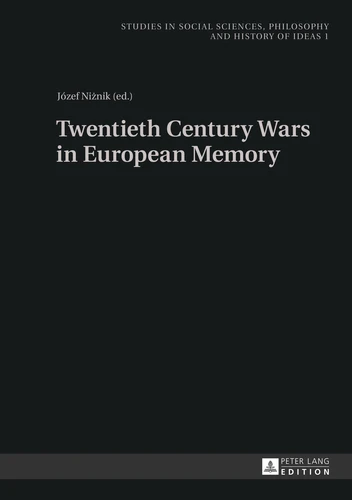
Twentieth Century Wars in European Memory
Par :Formats :
- Nombre de pages289
- ISBN978-3-631-62785-3
- EAN9783631627853
- Date de parution01/07/2013
- CollectionStudies in Social Sciences, Ph
- ÉditeurPeter Lang
Résumé
In various European countries the two world wars are remembered in very different ways, although everywhere one can find monuments which serve as material objectification of the memory of war. However, such objectifications not only determine certain patterns of remembrance and a specific perception of the past : they also contribute to local and/or national identity and create the basis for attitudes toward the other participants of war.
As it happens, instruments of memory live their own life and the meanings they attach to particular events may be changed by historical and political processes. The question remaining in the background of this publication is whether we can "make Europeans" without European collective memory transgressing national perspectives. The memory of war, which inevitably shows the overall absurdity and tragedy of war no matter where and against whom fought, may be the primary candidate for such Europeanization.
As it happens, instruments of memory live their own life and the meanings they attach to particular events may be changed by historical and political processes. The question remaining in the background of this publication is whether we can "make Europeans" without European collective memory transgressing national perspectives. The memory of war, which inevitably shows the overall absurdity and tragedy of war no matter where and against whom fought, may be the primary candidate for such Europeanization.