SOLDES
Jusqu'à -70% sur une sélection d'articles*


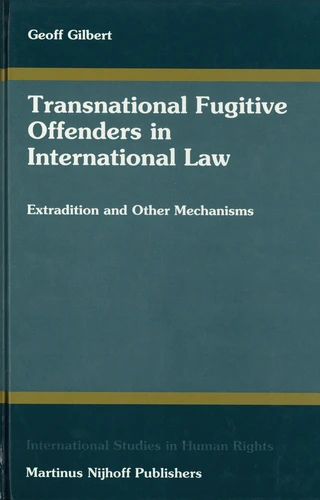
Transnational Fugitive Offenders in International Law. Extraditions and Other Mechanisms
Par :Formats :
- Paiement en ligne :
- Livraison à domicile ou en point Mondial Relay estimée à partir du 26 novembreCet article sera commandé chez un fournisseur et vous sera envoyé 127 jours après la date de votre commande.
- Retrait Click and Collect en magasin gratuit
- Livraison à domicile ou en point Mondial Relay estimée à partir du 26 novembre
- Réservation en ligne avec paiement en magasin :
- Indisponible pour réserver et payer en magasin
- Nombre de pages486
- FormatGrand Format
- PrésentationRelié
- Poids0.945 kg
- Dimensions16,5 cm × 24,5 cm × 3,2 cm
- ISBN90-411-1040-2
- EAN9789041110404
- Date de parution01/07/1998
- ÉditeurKluwer Law International
Résumé
International Criminal Law has undergone significant recent changes. Transnational Fugitive Offenders reflects the dynamic nature of the subject and keeps readers on the cutting edge of new developments. An ever-increasing number and variety of international agreements and cases has expanded extradition law. The jurisprudence relating to alternative means of rendition has also evolved in different ways in different jurisdictions.
Most notably, however, the remit of the subject as a whole has expanded. The concept of international criminal law now has to embrace crimes that occur in no single place, cross-border financial crimes where vast sums of money exist solely in cyberspace and which have connections with financial institutions in several countries. The international community has also established supranational criminal courts to deal with the aftermath of the wars in the former Yugoslavia and Rwanda.
The future will likely bring further changes as well. The permanent International Criminal Court, originally proposed by the International Law Commission, if established by the international community, would have jurisdiction as matters stand in 1998 over genocide, crimes against humanity and war crimes. The ultimate result may at last be the availability of overarching guidance as to the remit and scope of international criminal law.
Those studying extradition law, and/or working with transnational fugitive offenders in any capacity will find Transnational Fugitive Offenders an important, thought-provoking work on a very dynamic subject.
Most notably, however, the remit of the subject as a whole has expanded. The concept of international criminal law now has to embrace crimes that occur in no single place, cross-border financial crimes where vast sums of money exist solely in cyberspace and which have connections with financial institutions in several countries. The international community has also established supranational criminal courts to deal with the aftermath of the wars in the former Yugoslavia and Rwanda.
The future will likely bring further changes as well. The permanent International Criminal Court, originally proposed by the International Law Commission, if established by the international community, would have jurisdiction as matters stand in 1998 over genocide, crimes against humanity and war crimes. The ultimate result may at last be the availability of overarching guidance as to the remit and scope of international criminal law.
Those studying extradition law, and/or working with transnational fugitive offenders in any capacity will find Transnational Fugitive Offenders an important, thought-provoking work on a very dynamic subject.