The Editors : Prof. Dr. Kurt R. Spillmann is founder and since 1986 director of the Center for Security Studies and Conflict Research at the Swiss Federal Institute of Technology in Zurich. Prof. Dr. Andreas Wenger is deputy director of the center since 1996.
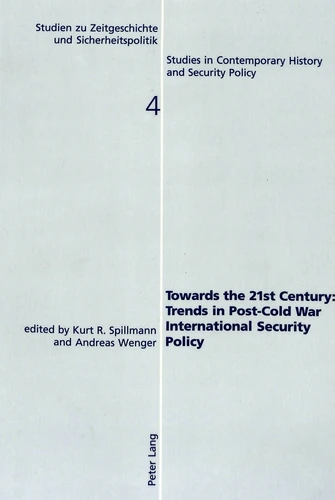
Towards the 21st Century: Trends in Post-Cold War International Security Policy
Par : ,Formats :
- Paiement en ligne :
- Livraison à domicile ou en point Mondial Relay estimée à partir du 29 septembreCet article sera commandé chez un fournisseur et vous sera envoyé 25 jours après la date de votre commande.
- Retrait Click and Collect en magasin gratuit
- Nombre de pages335
- ISBN3-906764-31-1
- EAN9783906764313
- Date de parution01/01/2000
- CollectionStudien zu Zeitgeschichte und
- ÉditeurPeter Lang
Résumé
This book addresses the issue of international security after the end of the Cold War. It looks at the key changes that have taken place since 1989, analyzes the main problems and issues today, and comes up with trends that are likely to shape international security policy in the coming decades. The book contains two different kinds of studies. In the first part, three leading research institutes offer their views on the development of post-Cold War international security policy.
These comprehensive surveys are authored by Mats Berdal (International Institute for Strategic Studies), Curt Gasteyger (Graduate Institute of International Studies) and Gregory F. Treverton, Marten van Heuven and Andrew E. Manning (RAND). The second part comprises case studies that focus on future challenges in European and American Security Policy. Contributions are made by renowned experts such as John Lewis Gaddis, William I.
Hitchcock, Fred Tanner, Pál Dunay, Victor-Yves Ghebali, André Liebich, Yuri Nazarkin, and William C. Wohlforth. The book concludes with a comparative analysis by the editors who attempt to identify discernible security trends and to raise those unsettled questions whose resolution will be decisive for the development of international security in the 21st century.
These comprehensive surveys are authored by Mats Berdal (International Institute for Strategic Studies), Curt Gasteyger (Graduate Institute of International Studies) and Gregory F. Treverton, Marten van Heuven and Andrew E. Manning (RAND). The second part comprises case studies that focus on future challenges in European and American Security Policy. Contributions are made by renowned experts such as John Lewis Gaddis, William I.
Hitchcock, Fred Tanner, Pál Dunay, Victor-Yves Ghebali, André Liebich, Yuri Nazarkin, and William C. Wohlforth. The book concludes with a comparative analysis by the editors who attempt to identify discernible security trends and to raise those unsettled questions whose resolution will be decisive for the development of international security in the 21st century.