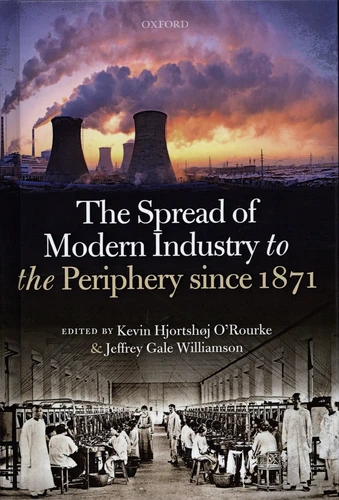
Ever since the Industrial Revolution of the late-eighteenth and early-nineteenth centuries, industrialization has been the key to modern economic growth. The fact that modern industry originated in Britain, and spread initially to north-western Europe and North America, implied a dramatic divergence in living standards between the industrial North (or "West") and a non-industrial, or even de-industrializing, South (or "Rest").
This nineteenth-century divergence, which had profound economic, military, and geopolitical implications, has been studied in great detail by many economists and historians. Today, this divergence between the "West" and the "Rest" is visibly unravelling, as economies in Asia, Latin America and even sub-Saharan Africa converge on the rich economies of Europe and North America. This phenomenon, which is set to define the twenty-first century, both economically and politically, has also been the subject of a considerable amount of research.
Less appreciated, however, are the deep historical roots of this convergence process, and in particular of the spread of modern industry to the global periphery. This volume fills this gap by providing a systematic, comparative, historical account of the spread of modern manufacturing beyond its traditional heartland, to Southern and Eastern Europe, the Middle East, Asia, Africa, and Latin America, or what we call the poor periphery.
It identifies the timing of this convergence, finding that this was fastest in the interwar and post-World War II years, not the more recent "miracle growth" years. It also identifies which driving forces were common to all periphery countries, and which were not.
Ever since the Industrial Revolution of the late-eighteenth and early-nineteenth centuries, industrialization has been the key to modern economic growth. The fact that modern industry originated in Britain, and spread initially to north-western Europe and North America, implied a dramatic divergence in living standards between the industrial North (or "West") and a non-industrial, or even de-industrializing, South (or "Rest").
This nineteenth-century divergence, which had profound economic, military, and geopolitical implications, has been studied in great detail by many economists and historians. Today, this divergence between the "West" and the "Rest" is visibly unravelling, as economies in Asia, Latin America and even sub-Saharan Africa converge on the rich economies of Europe and North America. This phenomenon, which is set to define the twenty-first century, both economically and politically, has also been the subject of a considerable amount of research.
Less appreciated, however, are the deep historical roots of this convergence process, and in particular of the spread of modern industry to the global periphery. This volume fills this gap by providing a systematic, comparative, historical account of the spread of modern manufacturing beyond its traditional heartland, to Southern and Eastern Europe, the Middle East, Asia, Africa, and Latin America, or what we call the poor periphery.
It identifies the timing of this convergence, finding that this was fastest in the interwar and post-World War II years, not the more recent "miracle growth" years. It also identifies which driving forces were common to all periphery countries, and which were not.