
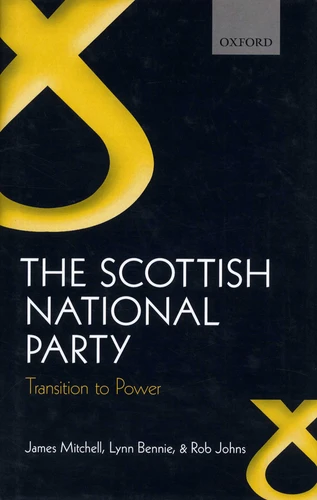
The Scottish National Party. Transition to Power
Par : , ,Formats :
- Paiement en ligne :
- Livraison à domicile ou en point Mondial Relay estimée à partir du 6 octobreCet article sera commandé chez un fournisseur et vous sera envoyé 25 jours après la date de votre commande.
- Retrait Click and Collect en magasin gratuit
- Nombre de pages194
- FormatGrand Format
- PrésentationRelié
- Poids0.39 kg
- Dimensions14,6 cm × 22,4 cm × 1,6 cm
- ISBN978-0-19-958000-2
- EAN9780199580002
- Date de parution01/02/2012
- ÉditeurOxford University Press
Résumé
The Scottish National Party is a study of the SNP immediately after it came to power in May 2007. It is based on a survey of the entire membership and elite interviews with over 80 senior party figures. Discussion is located within the appropriate literatures and comparisons are drawn with other British parties. The image of the SNP as a youthful party, with a decentralised social movement-type organisation is challenged.
The party is much older and much more male than had previously been thought and appears more like other conventional parties than its past image suggested. Its increased membership in recent years holds few clues as to how to re-engage youth, as even these recent joiners are predominantly older people, often former members returning to the party. The study questions the value of the civic-ethnic dichotomy in understanding nationalism.
SNP members, it argues, acknowledge different ways - civic and ethnic, with the emphasis very much on civic - of defining who is Scottish. The picture emerges of a coherent left-of-centre party that accepts the pragmatism of its leadership. While independence remains the key motivation for joining and being active, a sizeable minority see the party as a means of furthering Scottish interests. The idea of independence is examined in elite interviews and found, again, to be understood more pragmatically than many commentators have suggested.
The party is much older and much more male than had previously been thought and appears more like other conventional parties than its past image suggested. Its increased membership in recent years holds few clues as to how to re-engage youth, as even these recent joiners are predominantly older people, often former members returning to the party. The study questions the value of the civic-ethnic dichotomy in understanding nationalism.
SNP members, it argues, acknowledge different ways - civic and ethnic, with the emphasis very much on civic - of defining who is Scottish. The picture emerges of a coherent left-of-centre party that accepts the pragmatism of its leadership. While independence remains the key motivation for joining and being active, a sizeable minority see the party as a means of furthering Scottish interests. The idea of independence is examined in elite interviews and found, again, to be understood more pragmatically than many commentators have suggested.
A propos de James Mitchell
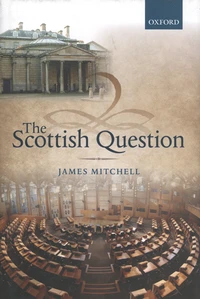
The Scottish Question
Grand Format
38,50 €