SOLDES
Jusqu'à -70% sur une sélection d'articles*

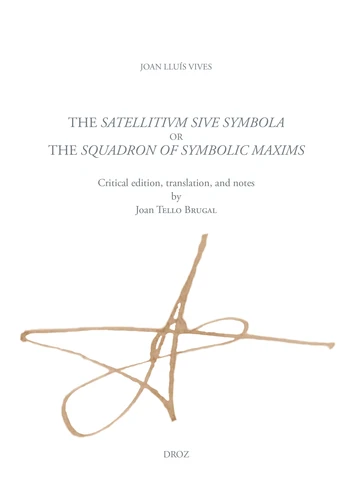
The Satellitium siue symbola, or the Squadron of symbolic maxims
Par :Formats :
- Paiement en ligne :
- Livraison à domicile ou en point Mondial Relay estimée à partir du 19 novembreCet article sera commandé chez un fournisseur et vous sera envoyé 127 jours après la date de votre commande.
- Retrait Click and Collect en magasin gratuit
- Livraison à domicile ou en point Mondial Relay estimée à partir du 19 novembre
- Réservation en ligne avec paiement en magasin :
- Indisponible pour réserver et payer en magasin
- Nombre de pages280
- FormatGrand Format
- PrésentationBroché
- Poids0.7 kg
- Dimensions17,2 cm × 24,8 cm × 0,0 cm
- ISBN978-2-600-06471-2
- EAN9782600064712
- Date de parution28/11/2023
- CollectionTravaux d'Humanisme et Renai
- ÉditeurDroz
Résumé
In a period of time when warfare and the corruption of morals challenged Christian creed and polities, Valencian humanist Joan Lluís Vives (Ioannes Lodouicus Viues, 1492/3-1540) produced a book of 239 proverbs or symbols to protect Princess Mary’s life and any potential reader against the vicissitudes of life. Probably inspired by Erasmus’s monumental Adages, Vives conceived his sayings as spiritual guards armed with a variety of virtues and wise teachings.
Moreover, the entire book acts as a protective device for those who are willing to engrave in their souls the wisdom delivered in each symbol. The Squadron of symbolic maxims is the first complete English translation of the Satellitium siue symbola and it is presented in its third and final stage. This edition is accompanied by a thorough catalogue of Vives’s works. Both the Renaissance scholar and the learned reader interested in paremiology and the Classical Tradition will certainly find light and comfort in this fine piece of writing.
Moreover, the entire book acts as a protective device for those who are willing to engrave in their souls the wisdom delivered in each symbol. The Squadron of symbolic maxims is the first complete English translation of the Satellitium siue symbola and it is presented in its third and final stage. This edition is accompanied by a thorough catalogue of Vives’s works. Both the Renaissance scholar and the learned reader interested in paremiology and the Classical Tradition will certainly find light and comfort in this fine piece of writing.