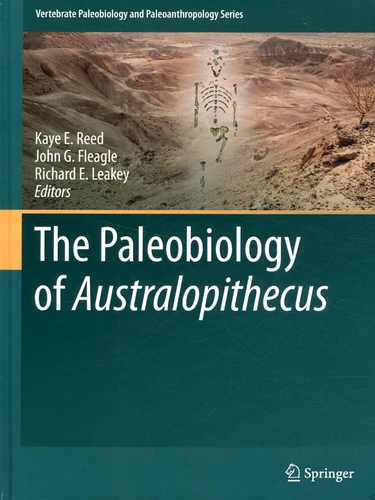
The Paleobiology of Australopithecus
Par : , ,Formats :
- Paiement en ligne :
- Livraison à domicile ou en point Mondial Relay estimée à partir du 24 décembreCet article sera commandé chez un fournisseur et vous sera envoyé 10 jours après la date de votre commande.
- Retrait Click and Collect en magasin gratuit
- Livraison à domicile ou en point Mondial Relay estimée à partir du 24 décembre
- Nombre de pages282
- PrésentationRelié
- Poids0.885 kg
- Dimensions21,5 cm × 28,5 cm × 1,7 cm
- ISBN978-94-007-5918-3
- EAN9789400759183
- Date de parution01/01/2013
- CollectionVertebral Paleobiology and Pal
- ÉditeurSpringer
Résumé
Australopithecus species have been the topic of much debate in palaeoanthropology since Raymond Dart described the first species, Australopithecus africanus, in 1925. This volume synthesizes the geological and paleontological context of the species in East and South Africa, covers individual sites, such as Dikika, Hadar, Sterkfontein, and Malapa, debates the alpha taxonomy of some of the species, and addresses questions of the movements of the species across the continent.
Additional chapters discuss the genus in terms of sexual dimorphism, diet reconstruction - using microwear and isotopic methodologies, postural and locomotor behavior, and ontogeny.ai
Australopithecus species have been the topic of much debate in palaeoanthropology since Raymond Dart described the first species, Australopithecus africanus, in 1925. This volume synthesizes the geological and paleontological context of the species in East and South Africa, covers individual sites, such as Dikika, Hadar, Sterkfontein, and Malapa, debates the alpha taxonomy of some of the species, and addresses questions of the movements of the species across the continent.
Additional chapters discuss the genus in terms of sexual dimorphism, diet reconstruction - using microwear and isotopic methodologies, postural and locomotor behavior, and ontogeny.ai

