SOLDES
Jusqu'à -70% sur une sélection d'articles*

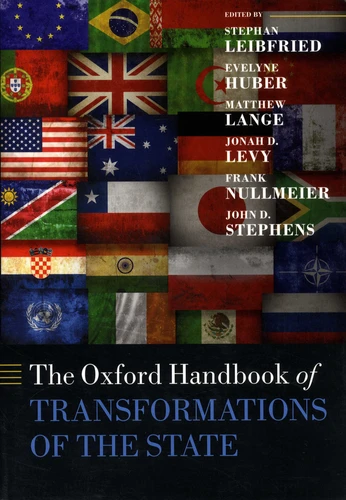
The Oxford Handbook of Transformations of the State
Par : , , ,Formats :
- Paiement en ligne :
- Livraison à domicile ou en point Mondial Relay estimée à partir du 25 novembreCet article sera commandé chez un fournisseur et vous sera envoyé 127 jours après la date de votre commande.
- Retrait Click and Collect en magasin gratuit
- Livraison à domicile ou en point Mondial Relay estimée à partir du 25 novembre
- Réservation en ligne avec paiement en magasin :
- Indisponible pour réserver et payer en magasin
- Nombre de pages900
- FormatGrand Format
- PrésentationBroché
- Poids1.585 kg
- Dimensions17,1 cm × 24,5 cm × 4,6 cm
- ISBN978-0-19-880892-3
- EAN9780198808923
- Date de parution01/09/2017
- ÉditeurOxford University Press
Résumé
This Oxford Handbook analyses transformations of the state, most notably, changes in state goals, capacities, instruments, and structures of authority. It offers a comprehensive treatment of the state in diverse regions of the world and different time periods but focuses on state transformations over the past half century. Leading experts probe the evolution of various state types, including : statist, liberal, corporatist, ISI, post-communist, developmental, rentier, predatory, and failed.
They also explore crucial challenges in assorted facets of state intervention, from financial regulation to migration, from national security to human development. The Handbook shows that the international system is both pressuring and bringing resources to the state, while multiplying the number of actors involved. As a result the state's external relations are increasingly marked by conflict, cooperation, and changing modes of governance.
The Handbook further demonstrates that state transformations vary dramatically across regions and that these divergent trajectories stem from differences in domestic societies, state structures, and positions within the international system.
They also explore crucial challenges in assorted facets of state intervention, from financial regulation to migration, from national security to human development. The Handbook shows that the international system is both pressuring and bringing resources to the state, while multiplying the number of actors involved. As a result the state's external relations are increasingly marked by conflict, cooperation, and changing modes of governance.
The Handbook further demonstrates that state transformations vary dramatically across regions and that these divergent trajectories stem from differences in domestic societies, state structures, and positions within the international system.