SOLDES
Jusqu'à -70% sur une sélection d'articles*


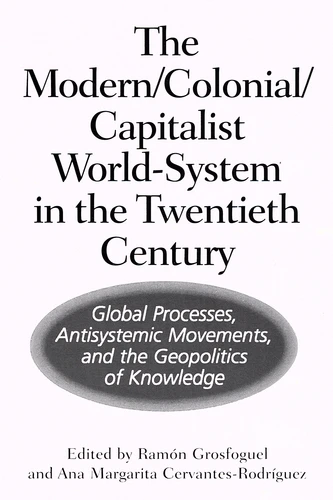
The Modern/Colonial/Capitalist World-System in the Twentieth Century. Global Processes, Antisystemic Movements, and the Geopolitics of Knowledge
Par : ,Formats :
- Paiement en ligne :
- Livraison à domicile ou en point Mondial Relay estimée à partir du 20 novembreCet article sera commandé chez un fournisseur et vous sera envoyé 127 jours après la date de votre commande.
- Retrait Click and Collect en magasin gratuit
- Livraison à domicile ou en point Mondial Relay estimée à partir du 20 novembre
- Réservation en ligne avec paiement en magasin :
- Indisponible pour réserver et payer en magasin
- Nombre de pages306
- FormatGrand Format
- PrésentationBroché
- Poids0.532 kg
- Dimensions15,6 cm × 23,4 cm × 1,8 cm
- ISBN0-275-97197-X
- EAN9780275971977
- Date de parution30/07/2002
- ÉditeurPraeger
Résumé
The perspectives of global processes and antisystemic movements, feminist theory, and the aftermath of the colonial system offer significant process in the advancement of world-system theory. The volume addresses three myths tied to Eurocentric forms of thinking - objectivist and universalist knowledges, the decolonization of the modern world, and developmentalism - all of which, the contributors argue, conceal the continued hierarchical and unequal relations of domination and exploitation between European and Euro-American centers and non-European peripheral regions.
World-system scholars address these and related aspects of the modern/colonial capitalist world-system. Addressing the myth of universalist knowledge, the volume reminds us that our knowledge is situated in the gender, class, racial, and sexual hierarchies of a specific region in the world-system, while the coloniality of power additionally situates our knowledge. The book further argues that the postcolonial era retains the hierarchy of colonialism, and the possibility of national development without global structural changes is one of the greatest of 20th-century myths.
Taking these perspectives into consideration, the contributors examine and help to refine classic world-system theory.
World-system scholars address these and related aspects of the modern/colonial capitalist world-system. Addressing the myth of universalist knowledge, the volume reminds us that our knowledge is situated in the gender, class, racial, and sexual hierarchies of a specific region in the world-system, while the coloniality of power additionally situates our knowledge. The book further argues that the postcolonial era retains the hierarchy of colonialism, and the possibility of national development without global structural changes is one of the greatest of 20th-century myths.
Taking these perspectives into consideration, the contributors examine and help to refine classic world-system theory.