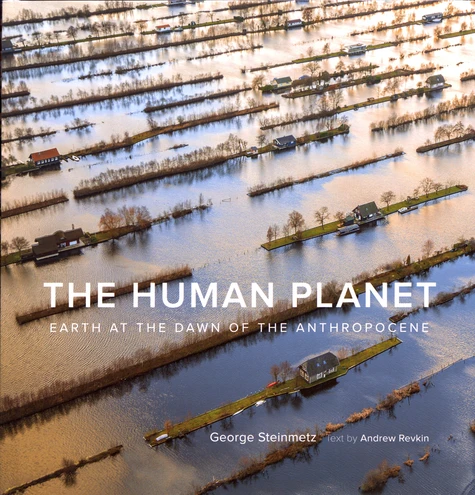
The Human Planet is a sweeping visual chronicle of Earth, revealing both its untrammeled natural features and the human project that relentlessly redesigns its surface in its quest to build shelter, grow food, generate energy, and create beauty through art and architecture. It is a primary document of the dawn of the Anthropocene, the new era in the geological history of the planet when, by growing scientific consensus, humanity's actions, rather than natural forces, are shaping its future.
Photographer George Steinmetz, who has circled the globe to report on such urgent issues as climate change, sustainable agriculture, and the ever-expanding human footprint, shows how, in ways both large and small, people seek to overrule nature, as in desert cities doing perpetual battle against drifting sand. He also finds hopeful signs of a new human approach to living with nature. In his thought-provoking introduction, renowned science writer Andrew Revkin, who also provides explanatory captions to the photographs, suggests that the dawn of the Anthropocene has brought with it a new sense of responsibility for Earth's future.
He asks, "Can there be a good Anthropocene ? " Steinmetz, in this portrait of the dramatic new face of our ancient home, raises the same pressing question.
The Human Planet is a sweeping visual chronicle of Earth, revealing both its untrammeled natural features and the human project that relentlessly redesigns its surface in its quest to build shelter, grow food, generate energy, and create beauty through art and architecture. It is a primary document of the dawn of the Anthropocene, the new era in the geological history of the planet when, by growing scientific consensus, humanity's actions, rather than natural forces, are shaping its future.
Photographer George Steinmetz, who has circled the globe to report on such urgent issues as climate change, sustainable agriculture, and the ever-expanding human footprint, shows how, in ways both large and small, people seek to overrule nature, as in desert cities doing perpetual battle against drifting sand. He also finds hopeful signs of a new human approach to living with nature. In his thought-provoking introduction, renowned science writer Andrew Revkin, who also provides explanatory captions to the photographs, suggests that the dawn of the Anthropocene has brought with it a new sense of responsibility for Earth's future.
He asks, "Can there be a good Anthropocene ? " Steinmetz, in this portrait of the dramatic new face of our ancient home, raises the same pressing question.