SOLDES
Jusqu'à -70% sur une sélection d'articles*


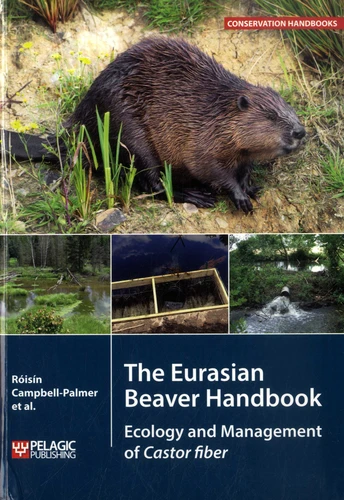
The Eurasian Beaver Handbook: Ecology and Management of Castor fiber
Par : , , ,Formats :
- Paiement en ligne :
- Livraison à domicile ou en point Mondial Relay estimée à partir du 18 novembreCet article sera commandé chez un fournisseur et vous sera envoyé 127 jours après la date de votre commande.
- Retrait Click and Collect en magasin gratuit
- Livraison à domicile ou en point Mondial Relay estimée à partir du 18 novembre
- Réservation en ligne avec paiement en magasin :
- Indisponible pour réserver et payer en magasin
- Nombre de pages202
- FormatGrand Format
- PrésentationBroché
- Poids0.438 kg
- Dimensions16,7 cm × 24,1 cm × 1,5 cm
- ISBN978-1-78427-113-8
- EAN9781784271138
- Date de parution15/08/2016
- CollectionConservation Handbooks
- ÉditeurPelagic Publishing
Résumé
Beavers are widely recognised as a keystone species which play a pivotal role in riparian ecology. Their tree felling and dam building behaviours coupled with a suite of other activities create a wealth of living opportunities that are exploited by a range of other species. Numerous scientific studies demonstrate that beaver generate living environments that are much richer in terms of both biodiversity and biomass than wetland environments from which they are absent.
Emerging contemporary studies indicate clearly that the landscapes they create can afford sustainable, cost effective remedies for water retention, flood alleviation, silt and chemical capture. Beaver activities, especially in highly modified environments, may be challenging to certain land use activities and landowners. Many trialled and tested methods to mitigate against these impacts, including a wide range of non-lethal management techniques, are regularly implemented across Europe and North America.
Many of these techniques will be new to people, especially in areas where beavers are newly re-establishing. This handbook serves to discuss both the benefits and challenges in living with this species, and collates the wide range of techniques that can be implemented to mitigate any negative impacts.
Emerging contemporary studies indicate clearly that the landscapes they create can afford sustainable, cost effective remedies for water retention, flood alleviation, silt and chemical capture. Beaver activities, especially in highly modified environments, may be challenging to certain land use activities and landowners. Many trialled and tested methods to mitigate against these impacts, including a wide range of non-lethal management techniques, are regularly implemented across Europe and North America.
Many of these techniques will be new to people, especially in areas where beavers are newly re-establishing. This handbook serves to discuss both the benefits and challenges in living with this species, and collates the wide range of techniques that can be implemented to mitigate any negative impacts.
L'éditeur en parle
In this Conservation Handbook : A detailed overview of the ecology and behaviour of the Eurasian beaver in contemporary landscapes ; How to recognise the presence and activities of beavers using a broad range of field signs ; Tried and tested methods for mitigating adverse impacts of beaver behaviour ; Demonstrates how to apply management techniques in accordance with current legislation.