SOLDES
Jusqu'à -70% sur une sélection d'articles*


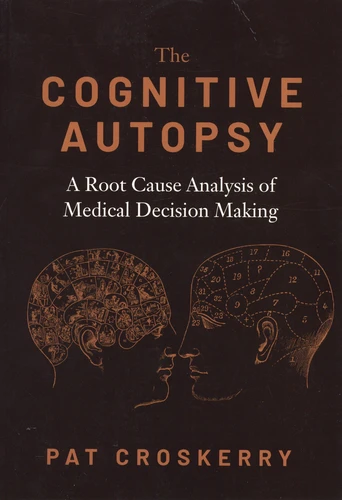
The cognitive autopsy. A root cause analysis of medical decision making
Par :Formats :
- Paiement en ligne :
- Livraison à domicile ou en point Mondial Relay estimée à partir du 19 novembreCet article sera commandé chez un fournisseur et vous sera envoyé 127 jours après la date de votre commande.
- Retrait Click and Collect en magasin gratuit
- Livraison à domicile ou en point Mondial Relay estimée à partir du 19 novembre
- Réservation en ligne avec paiement en magasin :
- Indisponible pour réserver et payer en magasin
- Nombre de pages325
- FormatGrand Format
- PrésentationBroché
- Poids0.705 kg
- Dimensions17,8 cm × 25,4 cm × 1,7 cm
- ISBN978-0-19-008874-3
- EAN9780190088743
- Date de parution24/07/2020
- ÉditeurOxford University Press
- PréfacierMark Graber
Résumé
Behind heart disease and cancer, medical error is now listed as one of the leading causes of death. Of the many medical errors that may lead to injury and death, diagnostic failure is regarded as the most significant. Generally, the majority of diagnostic failures are attributed to the clinicians directly involved with the patient, and to a lesser extent, the system in which they work. In turn, the majority of errors made by clinicians are due to decision-making failures manifested by various departures from rationality.
Of all the medical environments in which patients are seen and diagnosed, the emergency department is the most challenging. It has been described as a "wicked" environment where illness and disease may range from minor ailments and complaints to severe, life-threatening disorders. The Cognitive Autopsy is a novel strategy toward understanding medical error and diagnostic failure in 42 clinical cases with which the author was directly involved or became aware of at the time.
Essentially, it describes a cognitive approach toward root cause analysis of medical adverse events or near misses. Whereas root cause analysis typically focuses on the observable and measurable aspects of adverse events, the cognitive autopsy attempts to identify covert cognitive processes that may have contributed to outcomes. In this clinical setting, no cognitive process is directly observable but must be inferred from the behavior of the individual clinician.
The book illustrates unequivocally that chief among these cognitive processes are cognitive biases and other flaws in decision making, rather than knowledge deficits.
Of all the medical environments in which patients are seen and diagnosed, the emergency department is the most challenging. It has been described as a "wicked" environment where illness and disease may range from minor ailments and complaints to severe, life-threatening disorders. The Cognitive Autopsy is a novel strategy toward understanding medical error and diagnostic failure in 42 clinical cases with which the author was directly involved or became aware of at the time.
Essentially, it describes a cognitive approach toward root cause analysis of medical adverse events or near misses. Whereas root cause analysis typically focuses on the observable and measurable aspects of adverse events, the cognitive autopsy attempts to identify covert cognitive processes that may have contributed to outcomes. In this clinical setting, no cognitive process is directly observable but must be inferred from the behavior of the individual clinician.
The book illustrates unequivocally that chief among these cognitive processes are cognitive biases and other flaws in decision making, rather than knowledge deficits.