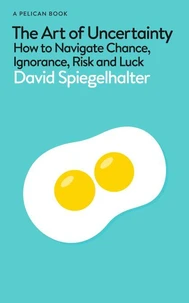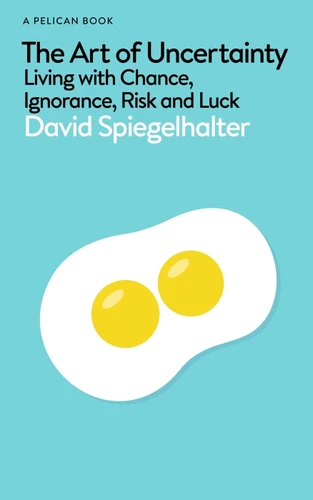
The Art of Uncertainty. How to Navigate Chance, Ignorance, Risk and Luck
Par :Formats :
- FormatGrand Format
- PrésentationRelié
- Poids0.612 kg
- Dimensions14,2 cm × 22,0 cm × 4,5 cm
- ISBN978-0-241-65862-8
- EAN9780241658628
- Date de parution19/09/2024
- ÉditeurPelican
Résumé
Life is uncertain. We are all the result of an unforeseen and unforeseeable sequence of small occurrences. But what underlies this fragile chain of events ? Is it random or just complex ? And what role does luck play in our lives ? David Spiegelhalter has spent his career crunching data in order to help understand uncertainty and assess the chances of what might happen. In The Art of Uncertainty, he gives readers a window onto how we can all do this better.
Uncertainty, he argues, is a relationship between the observer and an object in the outside world. He shows us how we can express it numerically, and then update our beliefs about the future in the face of constantly changing experience. In crystal-clear prose, he takes us through the principles of probability, a field that informs everything from annuities to pandemics and climate change, while also examining the limitations of statistical modelling and arguing we need to have the humility to admit our ignorance.
Drawing on a wide range of real-world examples, this is an essential guide to navigating uncertainty in a world that makes it inevitable.
Uncertainty, he argues, is a relationship between the observer and an object in the outside world. He shows us how we can express it numerically, and then update our beliefs about the future in the face of constantly changing experience. In crystal-clear prose, he takes us through the principles of probability, a field that informs everything from annuities to pandemics and climate change, while also examining the limitations of statistical modelling and arguing we need to have the humility to admit our ignorance.
Drawing on a wide range of real-world examples, this is an essential guide to navigating uncertainty in a world that makes it inevitable.