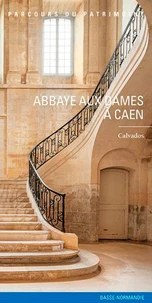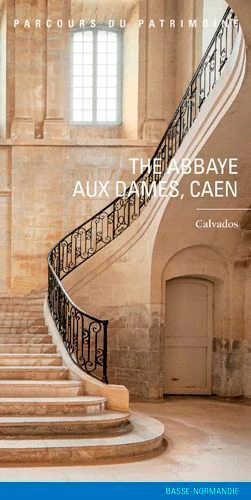
The abbaye aux Dames, Caen. Calvados
Par :Formats :
- Paiement en ligne :
- Livraison à domicile ou en point Mondial Relay estimée à partir du 3 septembreCet article sera commandé chez un fournisseur et vous sera envoyé 14 jours après la date de votre commande.
- Retrait Click and Collect en magasin gratuit
- Réservation en ligne avec paiement en magasin :
- Indisponible pour réserver et payer en magasin
- Nombre de pages72
- PrésentationBroché
- Poids0.2 kg
- Dimensions11,0 cm × 22,0 cm × 0,1 cm
- ISBN978-2-36219-119-0
- EAN9782362191190
- Date de parution20/06/2015
- CollectionParcours du Patrimoine
- ÉditeurLieux Dits
- PhotographeManuel de Rugy
Résumé
Built on a hill to the north-east of the city by Queen Matilda of Flanders, wife of William the Conqueror, the Abbaye aux Dames has a marvellous view of Caen harbour and the surrounding plain. The convent, set within 10 hectares of grounds, was completely rebuilt in the 18th century and is now a listed building, recognised as one of Normandy’s finest examples of classical architecture. Its Romanesque church, near the entrance, remains intact, and was a focal point for 19th century architects and historians like Victor Ruprich-Robert, who were fascinated by their country’s heritage.
Despite the occasional alteration, the church still retains its original appearance, harmonious yet unusual both in its elevation and its Oriental-style decoration. The upheaval of the French Revolution saw the convent handed over to the army. However, under the Napoleonic Empire, its buildings and gardens, with their majestic lime walks, were converted for hospital use, first sheltering Caen’s main hospital, or Hôtel-Dieu, and subsequently the Hospice Saint-Louis care-home for orphans and the elderly - until 1983, when the buildings became the headquarters of the Basse-Normandie Regional Council and its various departments.
Despite the occasional alteration, the church still retains its original appearance, harmonious yet unusual both in its elevation and its Oriental-style decoration. The upheaval of the French Revolution saw the convent handed over to the army. However, under the Napoleonic Empire, its buildings and gardens, with their majestic lime walks, were converted for hospital use, first sheltering Caen’s main hospital, or Hôtel-Dieu, and subsequently the Hospice Saint-Louis care-home for orphans and the elderly - until 1983, when the buildings became the headquarters of the Basse-Normandie Regional Council and its various departments.
L'éditeur en parle
Fondateur du mouvement Seiz Breur, artiste militant, ethnologue, René-Yves Creston (1898-1964) est resté attaché au St-Nazaire de sa naissance et à la presqu’île de Guérande, entre Brière et marais salants. Ce catalogue livre un brillant panorama commenté de ses images sur la vie et les univers de cette région. La plupart inédites. Le titre l'indique, les attitudes au travail sont très bien rendues : dans les marais salants, aux champs, sur la côte, dans les ports du Croisic, de Saint-Nazaire… Creston fut un illustrateur renommé et un grand voyageur qui, pour le Musée de l'Homme à Paris, devenu celui des Arts et Traditions Populaires, mais aussi pour le CNRS ou l'Institut, a nourri son oeuvre humaniste du quotidien populaire.
Il a fondé le Musée d'Art & d'Histoire de St-Brieuc.
Il a fondé le Musée d'Art & d'Histoire de St-Brieuc.