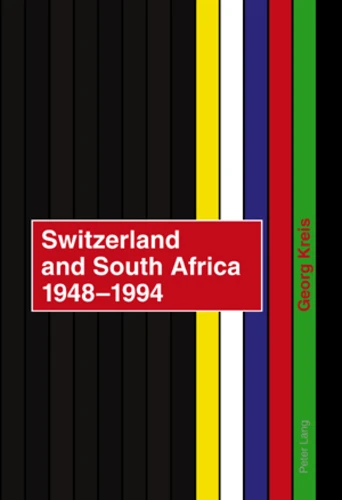
While other states imposed economic sanctions on the apartheid regime of South Africa, Swiss authorities long adhered to the position that South Africa is a state like any other. Swiss big business corporations saw an attractive trade partner in South Africa ; in part, they also profited from the boycotts of others. Additionally, some political forces sympathised openly with the regime in Pretoria.
Encouraged by the debate concerning Swiss policy and activity during the Second World War, in 1997 the order was given to initiate a historical study of Swiss behaviour towards the apartheid regime. Thus this report, commissioned by the Swiss parliament and the Federal Council, and passed over to the Swiss National Science Foundation for execution, came into being. It unites the results of ten different research projects.
The report identifies the most important players involved in fashioning relations with South Africa, it explains the legal situation in which these persons acted, and it describes the thought processes that led to the actions. The longest chapter deals with the attitudes and the areas of activity in the economic sector. Here the trade with loans, gold, diamonds and war materials is paramount. Other chapters are concerned with questions that are not primarily economic in nature, such as political declarations, the illusion of being in the role of a mediator, contacts in sports and culture, and, after 1986, the beginning of support for the black majority.
While other states imposed economic sanctions on the apartheid regime of South Africa, Swiss authorities long adhered to the position that South Africa is a state like any other. Swiss big business corporations saw an attractive trade partner in South Africa ; in part, they also profited from the boycotts of others. Additionally, some political forces sympathised openly with the regime in Pretoria.
Encouraged by the debate concerning Swiss policy and activity during the Second World War, in 1997 the order was given to initiate a historical study of Swiss behaviour towards the apartheid regime. Thus this report, commissioned by the Swiss parliament and the Federal Council, and passed over to the Swiss National Science Foundation for execution, came into being. It unites the results of ten different research projects.
The report identifies the most important players involved in fashioning relations with South Africa, it explains the legal situation in which these persons acted, and it describes the thought processes that led to the actions. The longest chapter deals with the attitudes and the areas of activity in the economic sector. Here the trade with loans, gold, diamonds and war materials is paramount. Other chapters are concerned with questions that are not primarily economic in nature, such as political declarations, the illusion of being in the role of a mediator, contacts in sports and culture, and, after 1986, the beginning of support for the black majority.