OFFRE LISEUSES
Une liseuse achetée = une housse offerte* jusqu'au 21 juin

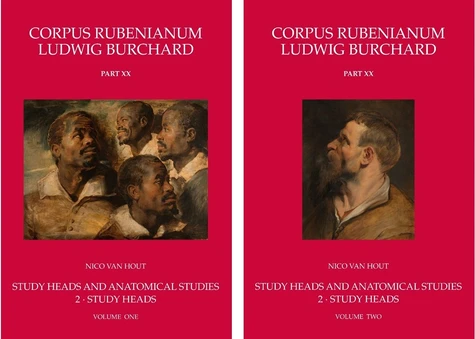
Study Heads. Corpus Rubenianum Ludwig Burchard, Part XX, 2
Par :Formats :
Expédié sous 127 jours
Cet article sera commandé chez un fournisseur et vous sera envoyé 127 jours après la date de votre commande.
- Paiement en ligne :
- Livraison à domicile ou en point Mondial Relay estimée à partir du 28 octobreCet article sera commandé chez un fournisseur et vous sera envoyé 127 jours après la date de votre commande.
- Retrait Click and Collect en magasin gratuit
- Livraison à domicile ou en point Mondial Relay estimée à partir du 28 octobre
- Réservation en ligne avec paiement en magasin :
- Indisponible pour réserver et payer en magasin
- Nombre de pages680
- PrésentationRelié
- Poids2.56 kg
- Dimensions17,5 cm × 26,0 cm × 0,0 cm
- ISBN978-1-912554-65-2
- EAN9781912554652
- Date de parution16/04/2021
- CollectionCorpus Rubenianum Ludwig Burch
- ÉditeurHarvey Miller Publishers
Résumé
This book is devoted to a remarkable aspect of Rubens's painted production. It investigates and catalogues not only works that Ludwig Burchard (1886–1960) gathered into the category of ‘Study Heads', but also head studies by artists closely connected to Rubens's workshop which were demonstrably used in his paintings. The existence of a stock of study heads or tronies allowed Rubens and his collaborators to exploit the same figures in many different contexts and create satisfying variety among the numerous characters involved in mythological, biblical or historical scenes.
In Rubens's work, study heads constitute an exceptional type of painting in that they were created not as autonomous works of art, but as a means to an end, an indispensable part of his artistic practice. Yet, even in this marginal category of work, Rubens achieves maximum artistic expression with an economy of means, as for example in the iconic Four Studies of the Head of an African Man in the Brussels Museum.
The originals of the study heads remained together until the sale of Rubens's possessions at his death in 1640. Over the centuries, many of Rubens's tronies have undergone transformation. Panels featuring several heads were cut up quite early on to be sold as separate pictures on the art market, and some tronies were converted by later artists into specific characters or even genre scenes by adding extra planks of wood and giving the heads distinctive clothes and attributes.
This book aims to reconstruct as far as possible the original appearance of Rubens's tronies, aided by the evidence of copies and technical research on the works themselves.
In Rubens's work, study heads constitute an exceptional type of painting in that they were created not as autonomous works of art, but as a means to an end, an indispensable part of his artistic practice. Yet, even in this marginal category of work, Rubens achieves maximum artistic expression with an economy of means, as for example in the iconic Four Studies of the Head of an African Man in the Brussels Museum.
The originals of the study heads remained together until the sale of Rubens's possessions at his death in 1640. Over the centuries, many of Rubens's tronies have undergone transformation. Panels featuring several heads were cut up quite early on to be sold as separate pictures on the art market, and some tronies were converted by later artists into specific characters or even genre scenes by adding extra planks of wood and giving the heads distinctive clothes and attributes.
This book aims to reconstruct as far as possible the original appearance of Rubens's tronies, aided by the evidence of copies and technical research on the works themselves.