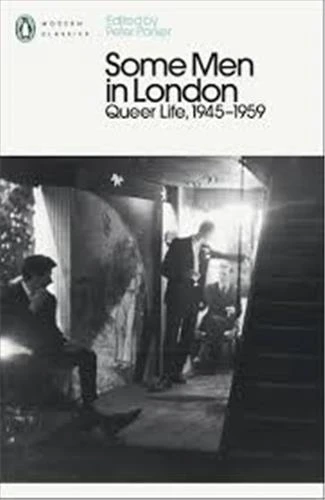
The first part of a major new anthology which uncovers the rich reality of life for queer men in London In the 1940s, it was believed that homosexuality had been becoming more widespread in the aftermath of war. A moral panic ensued, centred around London as the place to which gay men gravitated. In a major new anthology, Peter Parker explores what it was actually like for queer men in London in this period, whether they were well-known figures such as John Gielgud, 'Chips' Channon and E.M.
Forster, or living lives of quiet - or occasionally rowdy - anonymity in pubs, clubs, more public places of assignation, or at home. It is rich with letters, diaries, psychological textbooks, novels, films, plays and police records, covering a wide range of viewpoints, from those who deplored homosexuality to those who campaigned for its decriminalisation. This first volume, from 1945 to 1959, details a community forced to live at constant risk of blackmail or prison.
Yet it also shows a thriving and joyous subculture, one that enriched a mainstream culture often ignorant of its debt to gay creators. Some Men In London is a testament to queer life, which was always much more complex than newspapers, governments and the Metropolitan Police Force imagined.
The first part of a major new anthology which uncovers the rich reality of life for queer men in London In the 1940s, it was believed that homosexuality had been becoming more widespread in the aftermath of war. A moral panic ensued, centred around London as the place to which gay men gravitated. In a major new anthology, Peter Parker explores what it was actually like for queer men in London in this period, whether they were well-known figures such as John Gielgud, 'Chips' Channon and E.M.
Forster, or living lives of quiet - or occasionally rowdy - anonymity in pubs, clubs, more public places of assignation, or at home. It is rich with letters, diaries, psychological textbooks, novels, films, plays and police records, covering a wide range of viewpoints, from those who deplored homosexuality to those who campaigned for its decriminalisation. This first volume, from 1945 to 1959, details a community forced to live at constant risk of blackmail or prison.
Yet it also shows a thriving and joyous subculture, one that enriched a mainstream culture often ignorant of its debt to gay creators. Some Men In London is a testament to queer life, which was always much more complex than newspapers, governments and the Metropolitan Police Force imagined.