
The Author : Audrey P. Watkins is Associate Professor of African American Studies at Western Illinois University. She earned her Ph.D. in curriculum and instruction with specialization in curriculum design at the University of Illinois at Chicago. Her research interests include the education of people of African descent, transnationalism of older Jamaican women, social justice and education, black Englishes, Christian education, and teacher communication.
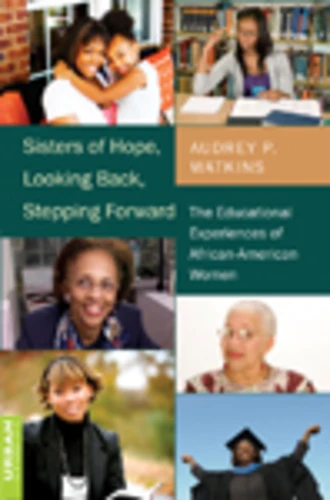
Sisters of Hope, Looking Back, Stepping Forward. The Educational Experiences of African-American Women
Par :Formats :
- Paiement en ligne :
- Livraison à domicile ou en point Mondial Relay estimée à partir du 7 octobreCet article sera commandé chez un fournisseur et vous sera envoyé 25 jours après la date de votre commande.
- Retrait Click and Collect en magasin gratuit
- Nombre de pages190
- ISBN978-1-4331-0292-9
- EAN9781433102929
- Date de parution01/01/2009
- CollectionCounterpoints
- ÉditeurPeter Lang
Résumé
This book documents the critiques and theorizings that working-class African-American women have drawn from their educational experiences. Based on a study of five African-American females enrolled in an employer-sponsored workplace speech and language training program, the book presents lessons learned from participants' efforts to negotiate effects of race, class, and gender discrimination both in and out of school.
Particularly relevant to the field of education, participants provide insight – on the roles of teachers and schools, instruction, expectations, motivation, race and education, educational experiences at work, and relevant education – to inform and help effect change. Because of its interdisciplinarity, Sisters of Hope, Looking Back, Stepping Forward is an asset for a variety of courses that seek to be inclusive of the educational experiences and theorizings of marginalized groups.
Its insights on race, class, gender, marginalization, and inequality are relevant to courses in areas such as African-American studies, women's studies, ethnic studies, multicultural education, sociolinguistics – black Englishes, history, oral history/autobiography, communication, and religion.
Particularly relevant to the field of education, participants provide insight – on the roles of teachers and schools, instruction, expectations, motivation, race and education, educational experiences at work, and relevant education – to inform and help effect change. Because of its interdisciplinarity, Sisters of Hope, Looking Back, Stepping Forward is an asset for a variety of courses that seek to be inclusive of the educational experiences and theorizings of marginalized groups.
Its insights on race, class, gender, marginalization, and inequality are relevant to courses in areas such as African-American studies, women's studies, ethnic studies, multicultural education, sociolinguistics – black Englishes, history, oral history/autobiography, communication, and religion.