

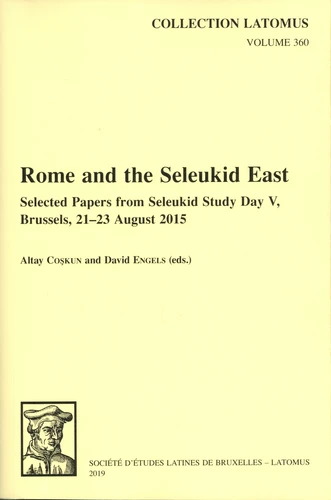
Rome and the Seleukid East. Select Papers form Seleukid Study Day V, Brussels, 21-23 August 2015
Par : ,Formats :
- Nombre de pages524
- FormatGrand Format
- PrésentationBroché
- Poids0.84 kg
- Dimensions16,1 cm × 24,0 cm × 3,2 cm
- ISBN978-90-429-3927-1
- EAN9789042939271
- Date de parution01/04/2019
- CollectionLatomus
- ÉditeurPeeters Leuven
Résumé
Seleukos I (312-281) was the strongest among the Successors of Alexander the Great, and his territory extended as far as Thrace in the West and Pakistan in the East for over a century. His kingdom reached a new pinnacle under Antiochos III (223-187), who combined military vigour with political skill, but also bears responsibility for its harsh defeat at the hands of the Romans, the ascending superpower in the Mediterranean.
This failure did not yet trigger the dynasty's collapse albeit. It was resilient and re-established itself as the leading power in the Near East under Antiochos IV (175-164), who was able to maintain friendship with Rome. Gradually, however, Seleukid rule was reduced to Syria or parts thereof by 129. The book tries to redress the balance of Seleukid weaknesses and strengths. Case studies either focus on power, politics and ideology of the Seleukid centre, or on continuity and change in 2nd-century Anatolia, Judaea and Babylon, before trying to integrate into a broader picture the factors that led to Seleukid disintegration.
This failure did not yet trigger the dynasty's collapse albeit. It was resilient and re-established itself as the leading power in the Near East under Antiochos IV (175-164), who was able to maintain friendship with Rome. Gradually, however, Seleukid rule was reduced to Syria or parts thereof by 129. The book tries to redress the balance of Seleukid weaknesses and strengths. Case studies either focus on power, politics and ideology of the Seleukid centre, or on continuity and change in 2nd-century Anatolia, Judaea and Babylon, before trying to integrate into a broader picture the factors that led to Seleukid disintegration.