
Anne Derbes, professor emerita of art history at Hood College, is the author of Picturing the Passion in Late Medieval Italy : Narrative Painting, Franciscan Ideologies, and the Levant, the co-author of The Usurer's Heart : Giotto and Enrico Scrovegni in the Arena Chapel, Padua, and co-editor of The Cambridge Companion to Giotto. Her articles have appeared in The Art Bulletin, Gesta, Speculum, The Journal of the Warburg and Courtauld Institutes, and other scholarly publications.
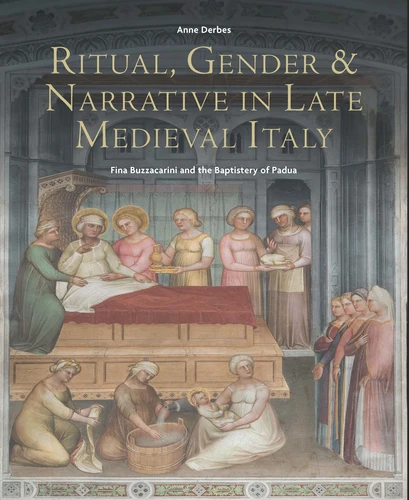
Ritual, Gender, and Narrative in Late Medieval Italy. Fina Buzzacarini and the Baptistery of Padua
Par :Formats :
- Paiement en ligne :
- Livraison à domicile ou en point Mondial Relay estimée à partir du 18 septembreCet article sera commandé chez un fournisseur et vous sera envoyé 25 jours après la date de votre commande.
- Retrait Click and Collect en magasin gratuit
- Nombre de pages384
- PrésentationRelié
- Poids1.94 kg
- Dimensions21,5 cm × 28,0 cm × 0,0 cm
- ISBN978-2-503-57968-9
- EAN9782503579689
- Date de parution31/08/2020
- CollectionStudies in the Visual Cultures
- ÉditeurBrepols
Résumé
Ritual, Gender, and Narrative in Late Medieval Italy is the first English-language study of the baptistery of Padua and its extraordinarily rich fresco program, which opens with Genesis and closes with the Apocalypse. Remarkably, when the building was refashioned and frescoed by Giusto de' Menabuoi in the 1370s, it was a woman, Fina Buzzacarini, who funded the enterprise. In late medieval Italy, baptisteries were potent symbols of civic identity, solidarity, and pride, and towns spent lavishly on them – but no other baptistery was so radically reworked at the behest of a woman.
Remarkably, too, though the building continued to function as Padua's baptismal church, the renovations transformed it into the mausoleum of Fina Buzzacarini and her family. This volume takes an interdisciplinary approach, using close visual analysis to argue that to a surprising degree, Fina exerted control over the images. The author argues too that ritual is equally important in understanding the frescoes : that in multiple ways that have rarely been considered, the images respond to and participate in the ritual enacted in this sacred space.
The prayers intoned at the font, the actions of the officiant, the hymns chanted in procession and inside the baptistery, and even details of the rite all find visual echoes on the baptistery's walls. Ultimately, gender and ritual intersect in the multilayered frescoes of the Padua baptistery.
Remarkably, too, though the building continued to function as Padua's baptismal church, the renovations transformed it into the mausoleum of Fina Buzzacarini and her family. This volume takes an interdisciplinary approach, using close visual analysis to argue that to a surprising degree, Fina exerted control over the images. The author argues too that ritual is equally important in understanding the frescoes : that in multiple ways that have rarely been considered, the images respond to and participate in the ritual enacted in this sacred space.
The prayers intoned at the font, the actions of the officiant, the hymns chanted in procession and inside the baptistery, and even details of the rite all find visual echoes on the baptistery's walls. Ultimately, gender and ritual intersect in the multilayered frescoes of the Padua baptistery.