OFFRE LISEUSES
Une liseuse achetée = une housse offerte* jusqu'au 21 juin

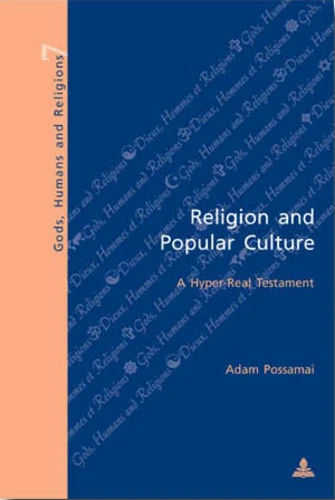
Religion and Popular Culture. A Hyper-Real Testament
Par :Formats :
Expédié sous 127 jours
Cet article sera commandé chez un fournisseur et vous sera envoyé 127 jours après la date de votre commande.
- Paiement en ligne :
- Livraison à domicile ou en point Mondial Relay estimée à partir du 29 octobreCet article sera commandé chez un fournisseur et vous sera envoyé 127 jours après la date de votre commande.
- Retrait Click and Collect en magasin gratuit
- Livraison à domicile ou en point Mondial Relay estimée à partir du 29 octobre
- Réservation en ligne avec paiement en magasin :
- Indisponible pour réserver et payer en magasin
- Nombre de pages176
- PrésentationBroché
- Dimensions22,0 cm × 15,0 cm × 0,0 cm
- ISBN978-90-5201-272-8
- EAN9789052012728
- Date de parution30/06/2017
- CollectionPLG.HUMANITIES
- ÉditeurPeter Lang AG
Résumé
Popular culture can no longer be exclusively seen as a source of escapism. It can amuse, entertain, instruct, and relax people, but what if it provides inspiration for religion ? The Church of All Worlds, the Church of Satan and Jediism from the Star Wars series are but three examples of new religious groups that have been greatly inspired by popular culture to (re)create a religious message. These are hyper-real religions, that is a simulacrum of a religion partly created out of popular culture which provides inspiration for believers/consumers.
These postmodern expressions of religion are likely to be consumed and individualised, and thus have more relevance to the self than to a community and/or congregation. On the other hand, religious fundamentalist groups tend, at times, to resist this synergy between popular culture and religion, and at other times, re-appropriate popular culture to promote their own religion. Examples of this re-appropriation are Christian super-hero comics and role playing games, Bible-based PC games, and ‘White Metal' music.
To explore these new phenomena, this book views itself as the ‘hyper-real testament' of these new religious phenomena by addressing the theories, among many others, of Baudrillard, Jameson and Lipovetsky, and by exploring the use of fictions such as those from Harry Potter, The Matrix, Star Trek, Buffy and The Lord of the Rings.
These postmodern expressions of religion are likely to be consumed and individualised, and thus have more relevance to the self than to a community and/or congregation. On the other hand, religious fundamentalist groups tend, at times, to resist this synergy between popular culture and religion, and at other times, re-appropriate popular culture to promote their own religion. Examples of this re-appropriation are Christian super-hero comics and role playing games, Bible-based PC games, and ‘White Metal' music.
To explore these new phenomena, this book views itself as the ‘hyper-real testament' of these new religious phenomena by addressing the theories, among many others, of Baudrillard, Jameson and Lipovetsky, and by exploring the use of fictions such as those from Harry Potter, The Matrix, Star Trek, Buffy and The Lord of the Rings.