
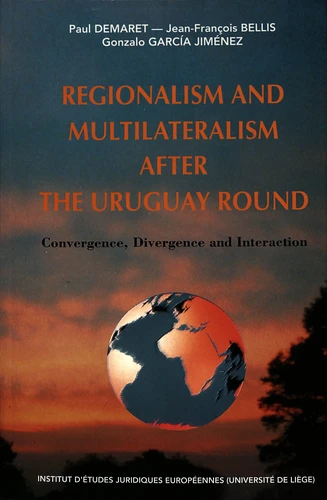
Regionalism and Multilateralism after the Uruguay Round. Convergence, Divergence and Interaction- Proceedings of a conference organised by the Institut d'Études Juridiques Européennes (IEJE), University of Liège
Par : , ,Formats :
- Nombre de pages862
- PrésentationBroché
- Dimensions14,8 cm × 21,0 cm × 0,0 cm
- ISBN978-90-5201-706-8
- EAN9789052017068
- Date de parution11/11/2008
- CollectionPLG.SOC.SCIENCE
- ÉditeurPeter Lang AG
Résumé
The completion of the Uruguay Round of Multilateral Trade Negotiations coincided with the development of a worldwide trend towards increased regionalism, as witnessed by the conclusion of NAFTA, the emerging process of regional integration in Latin America and the launching of APEC. While this new trend has caused some observers to evoke the prospect of a world economy increasingly divided among rival "trade blocs", recent studies by the OECD and the WTO suggest that regional trade agreements may complement rather than threaten the multilateral trade system.
This book reproduces the proceedings of a conference on Regional Trade Agreements and Multilateral Rules after the Uruguay Round organized by the University of Liège Faculty of Law. The reports cover the following issues : - comparative analysis of the major regional trade agreements in Europe (excluding the EC domestic market system), the Americas and the Asia Pacific area ; - the emerging new form of regionalism, inter-regionalism, the most spectacular example of which could be the Transatlantic Free Trade Area (TAFTA) currently under consideration ; - comparative analysis of the treatment of selected issues under the major regional trade arrangements in the world and their relationship with the existing or emerging multilateral rules : rules of origin ; dumping, subsidies and anticompetitive practices ; intellectual property rights ; social protection and social clause ; environmental standards ; national treatment ; mutual recognition and legislative harmonization ; dispute settlement mechanisms ; - analysis of the extent to which multilateral rules act as a constraint on regional trade arrangements and the reciprocal influence between regional and multilateral trade rules.
This book reproduces the proceedings of a conference on Regional Trade Agreements and Multilateral Rules after the Uruguay Round organized by the University of Liège Faculty of Law. The reports cover the following issues : - comparative analysis of the major regional trade agreements in Europe (excluding the EC domestic market system), the Americas and the Asia Pacific area ; - the emerging new form of regionalism, inter-regionalism, the most spectacular example of which could be the Transatlantic Free Trade Area (TAFTA) currently under consideration ; - comparative analysis of the treatment of selected issues under the major regional trade arrangements in the world and their relationship with the existing or emerging multilateral rules : rules of origin ; dumping, subsidies and anticompetitive practices ; intellectual property rights ; social protection and social clause ; environmental standards ; national treatment ; mutual recognition and legislative harmonization ; dispute settlement mechanisms ; - analysis of the extent to which multilateral rules act as a constraint on regional trade arrangements and the reciprocal influence between regional and multilateral trade rules.