

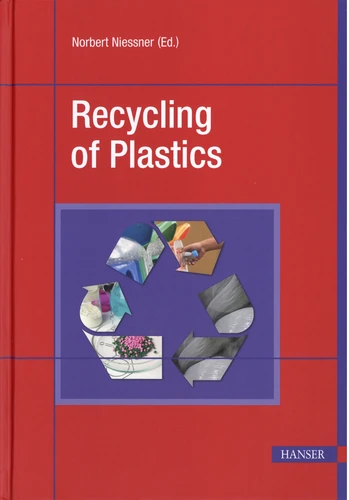
Recycling of Plastics
Par :Formats :
- Nombre de pages836
- FormatGrand Format
- PrésentationRelié
- Poids1.736 kg
- Dimensions17,7 cm × 24,2 cm × 4,6 cm
- ISBN978-1-56990-856-3
- EAN9781569908563
- Date de parution18/10/2022
- ÉditeurHanser
Résumé
Plastics have a vital role to play in energy-efficient and low-carbon technologies of the present and future, but for them to be classified as sustainable materials, there is a great need for practical and economic recycling methods and infrastructure. This book fills the gap for a modern comprehensive technical guide to recycling of plastics, covering the whole value chain from raw materials to recycled materials.
All important recycling technologies (mechanical, chemical/feedstock, dissolution) are discussed and compared to each other and alternative disposal methods such as energy recovery and gasification. Collecting, sorting, and purification methods are also covered, as are economic, legal, and political aspects. A strong emphasis is placed on data comparability, e.g. by standardized methods in measuring data.
Although this is a challenge to implement, comparing data across technologies, regions, and stakeholders along the value chain yields important benefits. Key instruments for such a target are life cycle assessments (LCAs), which are calculated according to ISO standards and hence provide the basis for comparison of the different recycling methods discussed by the numerous expert co-authors from industry and academia.
The book is an essential resource for engineers, researchers, students, product designers, plastics and product manufacturers, recyclers, sorters, decision makers in industry and government, and anyone wanting a comprehensive overview of plastics recycling and its context in sustainability.
All important recycling technologies (mechanical, chemical/feedstock, dissolution) are discussed and compared to each other and alternative disposal methods such as energy recovery and gasification. Collecting, sorting, and purification methods are also covered, as are economic, legal, and political aspects. A strong emphasis is placed on data comparability, e.g. by standardized methods in measuring data.
Although this is a challenge to implement, comparing data across technologies, regions, and stakeholders along the value chain yields important benefits. Key instruments for such a target are life cycle assessments (LCAs), which are calculated according to ISO standards and hence provide the basis for comparison of the different recycling methods discussed by the numerous expert co-authors from industry and academia.
The book is an essential resource for engineers, researchers, students, product designers, plastics and product manufacturers, recyclers, sorters, decision makers in industry and government, and anyone wanting a comprehensive overview of plastics recycling and its context in sustainability.
L'éditeur en parle
The handbook is divided into five parts : Fundamentals ; Legislative, Economic, and Political Considerations ; Life Cycle Assessment. Major Recycling Technologies : Overview ; Mechanical and Chemical Recycling of Each Major Plastic Material ; Dissolution ; Thermochemical Processes ; Recycling of Composites. Value Chain : Global Comparison ; Collection and Sorting ; Detection/Purification Technologies ; Reuse, Design for Recycling, Future Trends and Developments.