

Graham Hutton is Professor of Computer Science at the University of Nottingham. He has taught Haskell to thousands of students and received numerous best lecturer awards. Hutton has served as an editor of the Journal of Functional Programming, as chair of the Haskell Symposium and the International Conference on Functional Programming, as vice-chair of the ACM Special Interest Group on Programming Languages, and he is an ACM Distinguished Scientist.
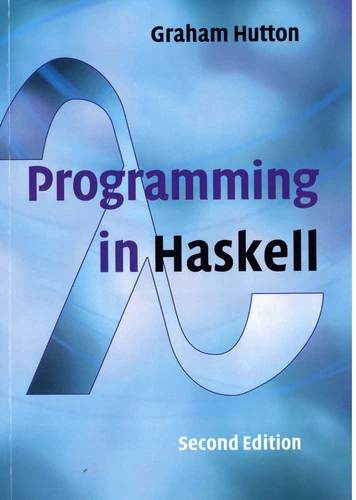
Programming in Haskell
2nd edition
Par : Formats :
- Nombre de pages304
- FormatGrand Format
- PrésentationBroché
- Poids0.585 kg
- Dimensions17,5 cm × 24,7 cm × 1,8 cm
- ISBN978-1-316-62622-1
- EAN9781316626221
- Date de parution01/08/2016
- ÉditeurCambridge University Press
Résumé
Haskell is a purely functional language that allows programmers to rapidly develop clear, concise and correct software. The language has grown in popularity in recent years, both in teaching and in industry. This book is based on the author's experience of teaching Haskell for more than 20 years. All concepts are explained from first principles and no programming experience is required, making this book accessible to a broad spectrum of readers.
While Part I focuses on basic concepts, Part II introduces the reader to more advanced topics. This new edition has been extensively updated and expanded to include recent and more advanced features of Haskell, new examples and exercises, selected solutions, and freely downloadable lecture slides and code. The presentation is clean and simple, while also being fully compliant with the latest version of the language, including recent changes concerning applicative, monadic, foldable and traversable types.
While Part I focuses on basic concepts, Part II introduces the reader to more advanced topics. This new edition has been extensively updated and expanded to include recent and more advanced features of Haskell, new examples and exercises, selected solutions, and freely downloadable lecture slides and code. The presentation is clean and simple, while also being fully compliant with the latest version of the language, including recent changes concerning applicative, monadic, foldable and traversable types.