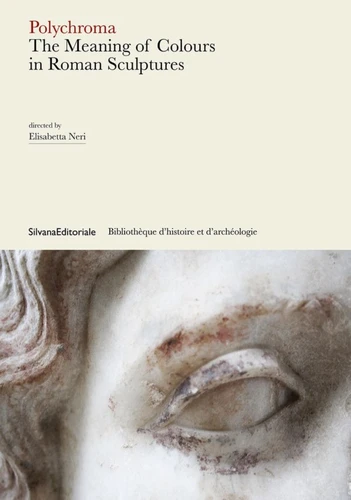
Long ignored, sometimes knowingly, since the idea of its presence went against the ideals of a white and pure ancient sculpture propagated post Winckelmann, the polychromy of classical and late sculpture and architecture has been the subject of important research programmes for thirty years. Within this field of study, the book focuses on the peculiarity of Roman imperial polychromy and its late developments (first century BC - sixth century AD) to investigate the technical features and the socio-cultural meaning of colours.
After an assessment of the studies on polychromy already carried out, this book presents the first results of the EU-MSCA-IF PolyCHRoMA project, which documented traces of colours not immediately visible (lost colours) through the physico-chemical analysis of a new corpus of sculptural and architectural elements from some major European and North African museums (Musées royaux d'Art et d'Histoire de Bruxelles, Musée royal de Mariemont, Musée départemental Arles antique, Musée Saint-Raymond de Toulouse, Museo Archeologico di Milano, Museo Nazionale e Museo Arcivescovile in Ravenna, Bardo National Museum and others Tunisian collections).
The systematic chronological and contextual study of these traces, before time ensures the loss of colours, confirms that polychromy offers a new source for assessing the cultural meaning of colour at the turn of the first millennium.
Long ignored, sometimes knowingly, since the idea of its presence went against the ideals of a white and pure ancient sculpture propagated post Winckelmann, the polychromy of classical and late sculpture and architecture has been the subject of important research programmes for thirty years. Within this field of study, the book focuses on the peculiarity of Roman imperial polychromy and its late developments (first century BC - sixth century AD) to investigate the technical features and the socio-cultural meaning of colours.
After an assessment of the studies on polychromy already carried out, this book presents the first results of the EU-MSCA-IF PolyCHRoMA project, which documented traces of colours not immediately visible (lost colours) through the physico-chemical analysis of a new corpus of sculptural and architectural elements from some major European and North African museums (Musées royaux d'Art et d'Histoire de Bruxelles, Musée royal de Mariemont, Musée départemental Arles antique, Musée Saint-Raymond de Toulouse, Museo Archeologico di Milano, Museo Nazionale e Museo Arcivescovile in Ravenna, Bardo National Museum and others Tunisian collections).
The systematic chronological and contextual study of these traces, before time ensures the loss of colours, confirms that polychromy offers a new source for assessing the cultural meaning of colour at the turn of the first millennium.