OFFRE LISEUSES
Une liseuse achetée = une housse offerte* jusqu'au 21 juin


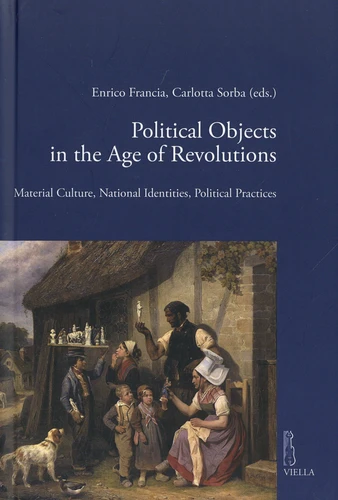
Political Objects in the Age of Revolution. Material Culture, National Identities, Political Practices
Par : ,Formats :
Expédié sous 127 jours
Cet article sera commandé chez un fournisseur et vous sera envoyé 127 jours après la date de votre commande.
- Paiement en ligne :
- Livraison à domicile ou en point Mondial Relay estimée à partir du 28 octobreCet article sera commandé chez un fournisseur et vous sera envoyé 127 jours après la date de votre commande.
- Retrait Click and Collect en magasin gratuit
- Livraison à domicile ou en point Mondial Relay estimée à partir du 28 octobre
- Réservation en ligne avec paiement en magasin :
- Indisponible pour réserver et payer en magasin
- Nombre de pages229
- FormatGrand Format
- PrésentationRelié
- Poids0.52 kg
- Dimensions16,0 cm × 24,0 cm × 1,8 cm
- ISBN978-88-3313-847-3
- EAN9788833138473
- Date de parution01/01/2021
- CollectionViella Historical Research
- ÉditeurViella
Résumé
The importance of things, the vitality and mobility of objects, their ability to offer different viewpoints on life in the past, are all themes that have emerged from the many recent historical studies on material culture. However, the political life of objects has not yet been fully investigated. This volume offers new analytical reflections and insights through a number of European case studies, and in this way reconstructs a material history of politics in the very significant period known as the Age of Revolutions.
From the late 18th century and through much of the 19th century, various kinds of objects (pocket-sized, decorative, clothing and other) played an important role in the processes of politicisation and mobilisation that accompanied, preceded and followed revolutionary episodes. Examining political action through material objects gives us deeper insight into the activities and behaviours of men and women in the past and allows us to cross-reference different analytical perspectives that rarely interact.
From the late 18th century and through much of the 19th century, various kinds of objects (pocket-sized, decorative, clothing and other) played an important role in the processes of politicisation and mobilisation that accompanied, preceded and followed revolutionary episodes. Examining political action through material objects gives us deeper insight into the activities and behaviours of men and women in the past and allows us to cross-reference different analytical perspectives that rarely interact.