Alexis Gautreau is'a cell biologist and Director of Research at the French national research organization CNRS, where he investigates how cells remodel their shape and migrate. He is also a Professor at the Ecole Polytechnique (Institut Polytechnique de Paris), and Chairman of its Biology Department.
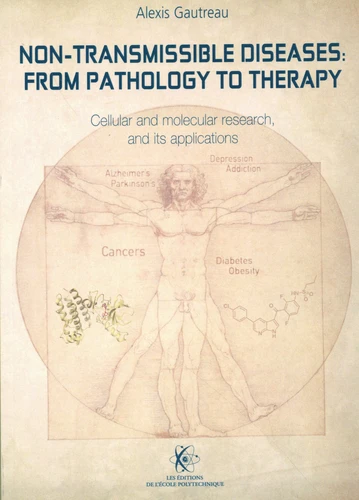
Non-Transmissible Diseases: From Pathology to Therapy. Cellular and molecular research, and its applications
Par :Formats :
- Paiement en ligne :
- Livraison à domicile ou en point Mondial Relay estimée à partir du 22 septembreCet article sera commandé chez un fournisseur et vous sera envoyé 19 jours après la date de votre commande.
- Retrait Click and Collect en magasin gratuit
- Réservation en ligne avec paiement en magasin :
- Indisponible pour réserver et payer en magasin
- Nombre de pages144
- FormatGrand Format
- PrésentationBroché
- Poids0.257 kg
- Dimensions17,0 cm × 24,0 cm × 0,9 cm
- ISBN978-2-7302-1733-0
- EAN9782730217330
- Date de parution03/07/2025
- ÉditeurEcole Polytechnique (editions)
Résumé
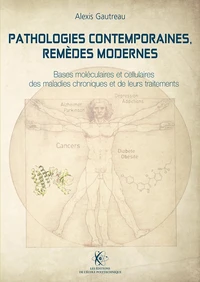
This book is the result of a course taught at the Ecole Polytechnique, the aim of which is to introduce students to the challenges facing society in the form of chronic non-transmissible diseases, such as diabetes, Alzheimer's and cancer. We combine the medical approach - asking how are these diseases diagnosed, what is the prognosis for the patient, and which treatments are available with the biological approach - do we understand the origins of these diseases ? If not, why not ? And if so, how can we use this understanding of pathophysiological mechanisms to develop effective treatments ? This is true "biomedicine".
L'éditeur en parle
This book is the result of a course taught at the Ecole Polytechnique, the aim of which is to introduce students to the challenges facing society in the form of chronic non-transmissible diseases, such as diabetes, Alzheimer's and cancer. We combine the medical approach - asking how are these diseases diagnosed, what is the prognosis for the patient, and which treatments are available with the biological approach - do we understand the origins of these diseases ? If not, why not ? And if so, how can we use this understanding of pathophysiological mechanisms to develop effective treatments ? This is true "biomedicine".