
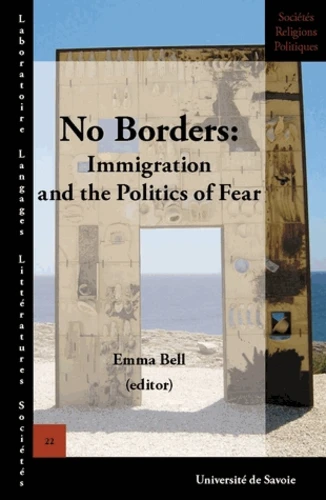
No borders : immigration and the politics of fear
Par :Formats :
- Paiement en ligne :
- Livraison à domicile ou en point Mondial Relay estimée à partir du 4 décembreCet article sera commandé chez un fournisseur et vous sera envoyé 127 jours après la date de votre commande.
- Retrait Click and Collect en magasin gratuit
- Réservation en ligne avec paiement en magasin :
- Indisponible pour réserver et payer en magasin
- Nombre de pages187
- PrésentationBroché
- Poids0.285 kg
- Dimensions15,0 cm × 23,0 cm × 1,0 cm
- ISBN978-2-919732-07-4
- EAN9782919732074
- Date de parution01/08/2012
- CollectionSociétés religions politiques
- ÉditeurUniversité de Savoie
Résumé
It is often asserted that neoliberal globalisation has had the liberating effect of breaking clown traditional borders as barriers to free trade are swept away. Yet, in practice, recent decades have seen the erection of a host of new boundarics and the reinforcement of old ones. Boundaries continue to be a salient feature of the contemporary political, geographical and social landscape. National and extra-national boundaries have been reinforced, particularly in the European security state and beyond as ever-stricter immigration controls are adopted.
Through an analysis of immigration policies in Europe, the United States and Australia, this book aims to challenge both the physical and metaphorical borders that divide citizens from migrants, `bogus' asylum-seekers from the `genuine', `legal' from `illegal' migrants... Rather than seeing immigration as problematic in itself, this collection instead regards barriers to immigration as problematic to the extent that they contribute to the marginalisation, criminalisation and even death of those who seek to make a better life for themselves in another country and tend to obfuscate the cultural, social and economic benefits which migration might bring to host countries.
Through an analysis of immigration policies in Europe, the United States and Australia, this book aims to challenge both the physical and metaphorical borders that divide citizens from migrants, `bogus' asylum-seekers from the `genuine', `legal' from `illegal' migrants... Rather than seeing immigration as problematic in itself, this collection instead regards barriers to immigration as problematic to the extent that they contribute to the marginalisation, criminalisation and even death of those who seek to make a better life for themselves in another country and tend to obfuscate the cultural, social and economic benefits which migration might bring to host countries.