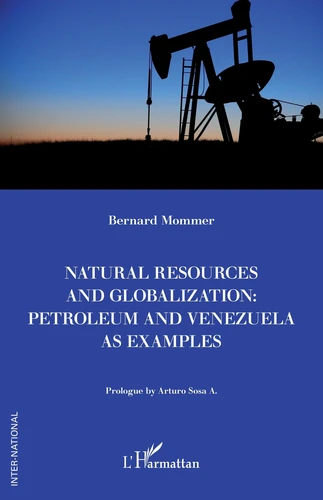
Bernard Mommer concentrates on the relationship between transnational capital and the extraction of natural resources. Capital from its beginning has sought to deny the right of petroleum exporting countries to capture an international ground rent. Its objectives today include imposing on consumers the costs of world-wide policies related to the protection of the environment. As part of the process of globalization, transnational capital is imposing over sovereign national rights a private international structure of arbitration.
The author focuses on the example of petroleum, given that it is by far the most important one, and of Venezuela, the most important petroleum exporting country during the 20th century. He also analyzes the impact of this development to the European Union and the Energy Charter Treaty, to Russia, to Germany, and to the ongoing negotiations between the European Union and Canada. One benefits from this book to the extent that reading it renews the desire to make an effective contribution to improving the legacy that the generation which we belong to intends to leave to subsequent ones (Arturo Sosa A.
, prologue).
Bernard Mommer concentrates on the relationship between transnational capital and the extraction of natural resources. Capital from its beginning has sought to deny the right of petroleum exporting countries to capture an international ground rent. Its objectives today include imposing on consumers the costs of world-wide policies related to the protection of the environment. As part of the process of globalization, transnational capital is imposing over sovereign national rights a private international structure of arbitration.
The author focuses on the example of petroleum, given that it is by far the most important one, and of Venezuela, the most important petroleum exporting country during the 20th century. He also analyzes the impact of this development to the European Union and the Energy Charter Treaty, to Russia, to Germany, and to the ongoing negotiations between the European Union and Canada. One benefits from this book to the extent that reading it renews the desire to make an effective contribution to improving the legacy that the generation which we belong to intends to leave to subsequent ones (Arturo Sosa A.
, prologue).