SOLDES
Jusqu'à -70% sur une sélection d'articles*


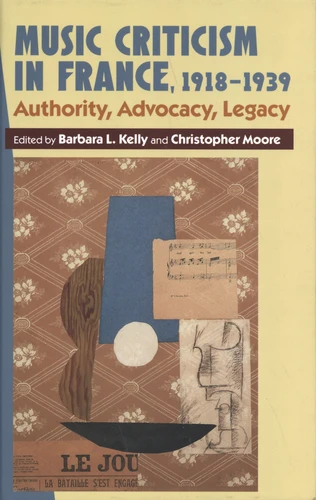
Music Criticism in France, 1918-1939. Authority, Advocacy, Legacy
Par : ,Formats :
- Paiement en ligne :
- Livraison à domicile ou en point Mondial Relay estimée à partir du 12 novembreCet article sera commandé chez un fournisseur et vous sera envoyé 127 jours après la date de votre commande.
- Retrait Click and Collect en magasin gratuit
- Livraison à domicile ou en point Mondial Relay estimée à partir du 12 novembre
- Réservation en ligne avec paiement en magasin :
- Indisponible pour réserver et payer en magasin
- Nombre de pages346
- FormatGrand Format
- PrésentationRelié
- Poids0.68 kg
- Dimensions15,6 cm × 23,4 cm × 2,1 cm
- ISBN978-1-78327-251-8
- EAN9781783272518
- Date de parution15/06/2018
- ÉditeurThe Boydell Press
Résumé
Music Criticism in France examines the aesthetic battles that animated and informed French musical criticism during the interwar period (1918-1939). Drawing upon a rich corpus of critical writings and archival documents, the book uncovers some of the public debates surrounding classical music in the immediate aftermath of the Great War until the eve of World War II. As such, it provides new insights into the priorities, values and challenges that affected the musical milieu of this war-bound generation.
This collection of essays brings together scholars from different areas of musicology and related humanities disciplines ; it also draws on different anglophone and francophone intellectual traditions. As well as considering the reception of individual works, the contributors examine key individuals, composer-critic pairings, the composer as critic and technician, the role of influential journals, and music criticism as a pedagogical tool for concert-going and radio audiences.
Focusing on the themes of authority, advocacy and legacy, it shows the contribution of principal critics such as Vuillermoz, Vallas, Prunières, Schloezer and Koechlin to shaping our understanding of music in the first half of the twentieth century in France. We see how criticism contributes to national and transnational preoccupations and agendas, which were of considerable importance throughout the interwar period and continue to have relevance today.
This collection of essays brings together scholars from different areas of musicology and related humanities disciplines ; it also draws on different anglophone and francophone intellectual traditions. As well as considering the reception of individual works, the contributors examine key individuals, composer-critic pairings, the composer as critic and technician, the role of influential journals, and music criticism as a pedagogical tool for concert-going and radio audiences.
Focusing on the themes of authority, advocacy and legacy, it shows the contribution of principal critics such as Vuillermoz, Vallas, Prunières, Schloezer and Koechlin to shaping our understanding of music in the first half of the twentieth century in France. We see how criticism contributes to national and transnational preoccupations and agendas, which were of considerable importance throughout the interwar period and continue to have relevance today.