

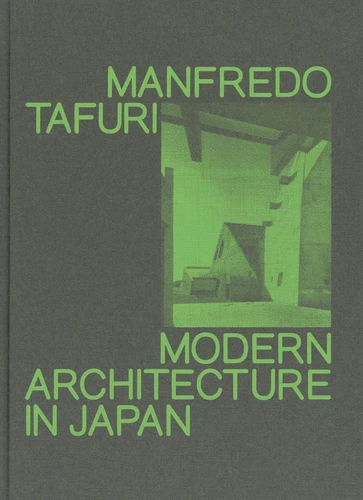
Modern architecture in japan. Manfredo Tafuri
Par :Formats :
- Nombre de pages255
- FormatGrand Format
- PrésentationRelié
- Poids0.395 kg
- Dimensions15,2 cm × 21,2 cm × 2,6 cm
- ISBN978-1-913620-83-7
- EAN9781913620837
- Date de parution01/10/2022
- ÉditeurMack
- TraducteurDavid Kerr
Résumé
"Manfredo Tafuri (1935-1994), the celebrated Italian architectural historian, published L'Architettura Moderna in Giappone in 1964. At the time, Tafuri was twenty-nine years old and had not visited Japan. His slim volume on the country's postwar architecture was the first in a series of guidebooks on contemporary architecture under the direction of Leonardo Benevolo. Translated into English for the first time, the book represents a rare outsider's view of the metabolist movement and figures such as Kenzo Tange by one of the world's most astute critics of the second part of the twentieth century.
Tafuri's ideas about Japanese architecture were primarily formed through texts, including magazine articles and contemporary photographs. How did Tafuri come to select the achievements of Japanese architects as the focus of his reflections on modern architecture ? What happens when a historian of architecture relies purely on photographs for making judgements about a building ? This new translation is accompanied by a series of commentaries on Tafuri and on Japanese architecture by Mohsen Mostafavi, Frederico Scaroni, Marco Biraghi, Catherine Ingram, and Ken Tadashi Oshimam, as well as a rich collection of images from the time of the original publication and more recent photographs.
Together, these texts and images situate the reader in relation to both Tafuri's scholarship and modern architecture in Japan, while preserving aspects of the character of the original Italian edition".
Tafuri's ideas about Japanese architecture were primarily formed through texts, including magazine articles and contemporary photographs. How did Tafuri come to select the achievements of Japanese architects as the focus of his reflections on modern architecture ? What happens when a historian of architecture relies purely on photographs for making judgements about a building ? This new translation is accompanied by a series of commentaries on Tafuri and on Japanese architecture by Mohsen Mostafavi, Frederico Scaroni, Marco Biraghi, Catherine Ingram, and Ken Tadashi Oshimam, as well as a rich collection of images from the time of the original publication and more recent photographs.
Together, these texts and images situate the reader in relation to both Tafuri's scholarship and modern architecture in Japan, while preserving aspects of the character of the original Italian edition".