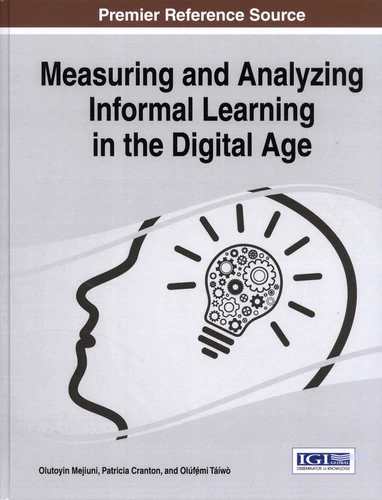
Measuring and Analyzing Informal Learning in the Digital Age
Par : , ,Formats :
- Nombre de pages380
- FormatGrand Format
- PrésentationRelié
- Poids1.25 kg
- Dimensions22,2 cm × 28,8 cm × 2,6 cm
- ISBN978-1-4666-8265-8
- EAN9781466682658
- Date de parution01/05/2015
- CollectionPremier Reference Source
- ÉditeurInformation Science Reference
Résumé
In the twenty-first century, learning—and the definition of education—is changing. New digital, online, and social tools have the ability to transform the classroom and engage learners like never before. In the midst of this technological revolution, it is crucial for educators and administrators to be able to gauge the impact of digital tools on learners in a variety of settings. Measuring and Analyzing Informal Learning in the Digital Age addresses the need for educators, administrators, and professionals across industries to be more attentive to the learning process outside of a traditional classroom setting.
As online learning, and MOOCs in particular, become more mainstream, tracking informal learning becomes difficult despite the necessity of feedback and measurement in non-formal learning environments. Investigating some of the primary technologies being used in educational settings and how a less structured and more open learning environment can effectively motivate students and non-traditional learners, this premier reference is a crucial source of information for educators, administrators, theorists, and other professionals in the field of education.
As online learning, and MOOCs in particular, become more mainstream, tracking informal learning becomes difficult despite the necessity of feedback and measurement in non-formal learning environments. Investigating some of the primary technologies being used in educational settings and how a less structured and more open learning environment can effectively motivate students and non-traditional learners, this premier reference is a crucial source of information for educators, administrators, theorists, and other professionals in the field of education.