

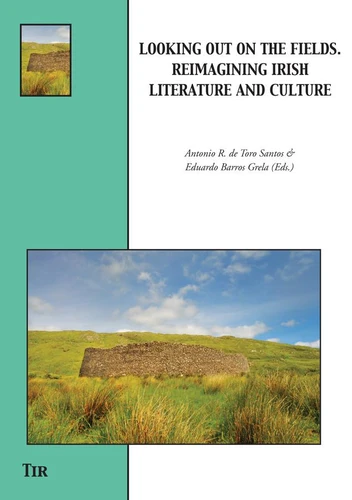
Looking Out on the Fields. Reimagining Irish Literature and Culture
Par : ,Formats :
- Nombre de pages298
- FormatGrand Format
- PrésentationBroché
- Poids0.375 kg
- Dimensions14,5 cm × 20,5 cm × 2,5 cm
- ISBN978-2-917681-43-5
- EAN9782917681435
- Date de parution01/01/2018
- ÉditeurTir CRBC Rennes-2 Bretagne
Résumé
Readers of Reimagining Irish Literature will find a diverse compilation of essays dealing with relational views of the literature and culture of Ireland. Among these, there is a relevant body of studies relating to the work of James Joyce, which indude interdisciplinary approaches focused on the literary and cultural extensions of the most influential writer of the early 20th century. The focus on this author is justified, first, by the centenary of the publication of Ulysses as a serialised contribution in the American journal The Little Review (1918-1920), and second, by its permanent condition as a cutting edge author and as a permanent source for comparative studies about the Irish identity.
The second part of the book gathers a series of studies centred on the different projections of Irish literature and culture, both modern and contemporary, as well as on other comparative components of the cultures of Ireland, such as film, education, theatre, transnational relations, or the arts. Furthermore, this section of the collection aims to reinforce the transculturel significance of Ireland, a quality of its identity that has been fundamental in the development of Irish letters.
The second part of the book gathers a series of studies centred on the different projections of Irish literature and culture, both modern and contemporary, as well as on other comparative components of the cultures of Ireland, such as film, education, theatre, transnational relations, or the arts. Furthermore, this section of the collection aims to reinforce the transculturel significance of Ireland, a quality of its identity that has been fundamental in the development of Irish letters.