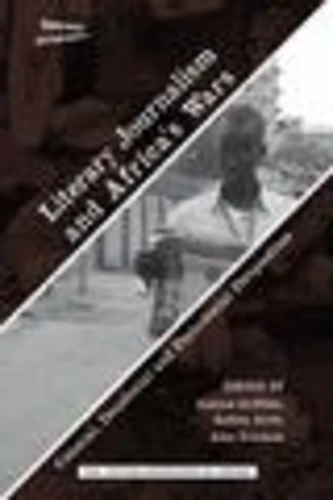
This collection of essays explores ways in which early and late examples of literary journalism from England, France, Spain, Portugal and the United States interpolate the aesthetics of war reporting on various fronts and at divergent times in Africa's history, both reproducing and deconstructing the widespread colonial discourse that lies behind nearly every war, campaign, coup, assassination and pogrom that has scarred the continent over the past century.
Although often a product of that colonial discourse, the literary journalism examined in this collection was motivated at least in part by the desire to expose the power imbalances that upheld it. Among the primary sources included in this volume are texts by Henry Morton Stanley, Ramón J. Sender, Martinho Simões, Frederick Forsyth, Kurt Vonnegut, Ryszard Kapuscinski, Philip Gourevitch, Jean Hatzfeld and a host of foreign correspondents from LeMonde.
Incorporating a wide range of international critical perspectives, this book assesses the impact literary journalism has had on various nations' literary war reporting emanating from colonialist and postcolonialist conflicts and how those stories might help to reconfigure certain historical legacies, journalistic heuristics and literary representations of Africa in the 21st century. By presenting excerpts from several primary sources alongside a contextual gloss and a scholarly essay, the collection highlights the varied effects produced when literary techniques were fused with factual war reporting.
This collection of essays explores ways in which early and late examples of literary journalism from England, France, Spain, Portugal and the United States interpolate the aesthetics of war reporting on various fronts and at divergent times in Africa's history, both reproducing and deconstructing the widespread colonial discourse that lies behind nearly every war, campaign, coup, assassination and pogrom that has scarred the continent over the past century.
Although often a product of that colonial discourse, the literary journalism examined in this collection was motivated at least in part by the desire to expose the power imbalances that upheld it. Among the primary sources included in this volume are texts by Henry Morton Stanley, Ramón J. Sender, Martinho Simões, Frederick Forsyth, Kurt Vonnegut, Ryszard Kapuscinski, Philip Gourevitch, Jean Hatzfeld and a host of foreign correspondents from LeMonde.
Incorporating a wide range of international critical perspectives, this book assesses the impact literary journalism has had on various nations' literary war reporting emanating from colonialist and postcolonialist conflicts and how those stories might help to reconfigure certain historical legacies, journalistic heuristics and literary representations of Africa in the 21st century. By presenting excerpts from several primary sources alongside a contextual gloss and a scholarly essay, the collection highlights the varied effects produced when literary techniques were fused with factual war reporting.