
Young Richard Kim is Associate Professor, Classics and Mediterranean Studies and History, at The University of Illinois at Chicago.A. E. T. McLaughlin teaches History and Theology at Gannon University.
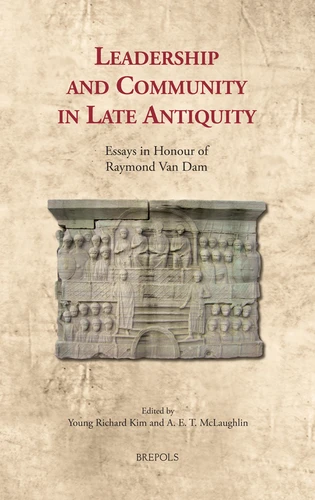
Leadership and Community in Late Antiquity. Essays in Honour of Raymond Van Dam
Par : ,Formats :
- Paiement en ligne :
- Livraison à domicile ou en point Mondial Relay estimée à partir du 18 septembreCet article sera commandé chez un fournisseur et vous sera envoyé 25 jours après la date de votre commande.
- Retrait Click and Collect en magasin gratuit
- Réservation en ligne avec paiement en magasin :
- Indisponible pour réserver et payer en magasin
- Nombre de pages337
- PrésentationRelié
- Poids0.73 kg
- Dimensions15,6 cm × 23,4 cm × 0,0 cm
- ISBN978-2-503-58323-5
- EAN9782503583235
- Date de parution25/05/2020
- CollectionCultural Encounters in Late An
- ÉditeurBrepols
Résumé
Throughout a distinguished career, Raymond Van Dam has contributed significantly to our understanding of Late Antiquity and the early Middle Ages with ground-breaking studies on Gaul, Cappadocia, and the emperor Constantine. The hallmarks of his scholarship are critical study of a wide variety of written and material sources and careful historical analysis, insightfully rooted in sociological and anthropological methodologies.
The essays in this volume, written by Van Dam's former students, colleagues, and friends, explore the dynamics between leaders and their communities in the fourth through seventh centuries. During this period, people negotiated profound religious, intellectual, and cultural change while still deeply enmeshed in the legacy of the Roman Empire. The memory of the classical past was a powerful and compelling social and political force for the denizens of Late Antiquity, even as their physical surroundings came to resemble less and less the ideals of the Greco-Roman city.
These themes — leadership, community, and memory — have been central to Van Dam's work, and the contributors to this volume build on the legacy of his scholarship. Their papers examine how leaders exercised their authority in their communities, at times exhibiting continuity with ancient patterns of leadership, but in other cases shifting toward new paradigms characteristic of a post-classical world.
Taken together, the essays produce a fuller picture of the Mediterranean world and add further nuance to our understanding of Late Antiquity and early Middle Ages as a time of both continuity and transformation.
The essays in this volume, written by Van Dam's former students, colleagues, and friends, explore the dynamics between leaders and their communities in the fourth through seventh centuries. During this period, people negotiated profound religious, intellectual, and cultural change while still deeply enmeshed in the legacy of the Roman Empire. The memory of the classical past was a powerful and compelling social and political force for the denizens of Late Antiquity, even as their physical surroundings came to resemble less and less the ideals of the Greco-Roman city.
These themes — leadership, community, and memory — have been central to Van Dam's work, and the contributors to this volume build on the legacy of his scholarship. Their papers examine how leaders exercised their authority in their communities, at times exhibiting continuity with ancient patterns of leadership, but in other cases shifting toward new paradigms characteristic of a post-classical world.
Taken together, the essays produce a fuller picture of the Mediterranean world and add further nuance to our understanding of Late Antiquity and early Middle Ages as a time of both continuity and transformation.