
Lynda Mulvin : expertise in classical antiquity and architecture ; Nigel Westbrook : expertise in interpreting late antique cross cultural changes in architecurre
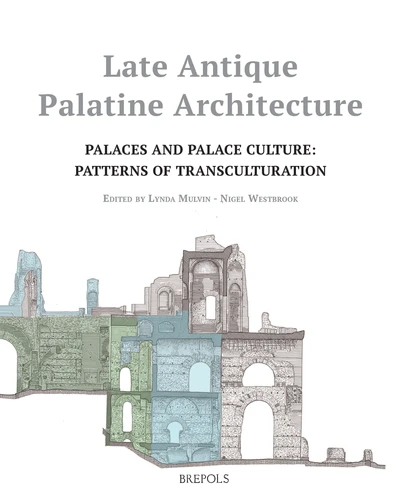
Late Antique Palatine Architecture. Palaces and Palace Culture: Patterns of Transculturation
Par : ,Formats :
- Paiement en ligne :
- Livraison à domicile ou en point Mondial Relay estimée à partir du 23 septembreCet article sera commandé chez un fournisseur et vous sera envoyé 19 jours après la date de votre commande.
- Retrait Click and Collect en magasin gratuit
- Réservation en ligne avec paiement en magasin :
- Indisponible pour réserver et payer en magasin
- Nombre de pages213
- PrésentationBroché
- Poids0.96 kg
- Dimensions22,0 cm × 28,0 cm × 0,0 cm
- ISBN978-2-503-57472-1
- EAN9782503574721
- Date de parution27/04/2020
- CollectionArchitectural Crossroads
- ÉditeurBrepols
Résumé
Late antique palaces and palace culture served as the loci of dramatic shifts in architecture and design, as well as urban planning, public works and patronage, in the imperial cities of Rome and Constantinople, and the first palatine centres of the Holy Roman Empire. This volume provides a wealth of detailed information and perspectives on late antique and early medieval design practices, with emphasis on the new spatial configurations and their decorative schema.
The essays in this collection provide original, ground-breaking narratives on palatine architecture and culture in this period, integrating cross-cultural dialogues from Rome as centre of imperial palace architecture with details of late palace embellishments and the ceremonial usage which was brought to the fore, as the discussion shifts to the new imperial capital of Nova Roma, Constantinople, and then to the Carolingian centres via Rome and Ravenna.
A parallel discussion emerges, where prototypes for palaces and ceremonial courts were imported and reinterpreted through a process of citation. Principal interest resides in the contrasts of palatial and residential complexes, intended to demonstrate new ceremonies and the practices enacted within and through them. The focus of the volume is then shifted to eastern and western provincial and rural high-status residences and landscapes of power, examining the relationships between palaces and late Roman villas and the court and court culture, ultimately revealing a political agenda in use through and in the language of architecture.
The essays in this collection provide original, ground-breaking narratives on palatine architecture and culture in this period, integrating cross-cultural dialogues from Rome as centre of imperial palace architecture with details of late palace embellishments and the ceremonial usage which was brought to the fore, as the discussion shifts to the new imperial capital of Nova Roma, Constantinople, and then to the Carolingian centres via Rome and Ravenna.
A parallel discussion emerges, where prototypes for palaces and ceremonial courts were imported and reinterpreted through a process of citation. Principal interest resides in the contrasts of palatial and residential complexes, intended to demonstrate new ceremonies and the practices enacted within and through them. The focus of the volume is then shifted to eastern and western provincial and rural high-status residences and landscapes of power, examining the relationships between palaces and late Roman villas and the court and court culture, ultimately revealing a political agenda in use through and in the language of architecture.