
Steve Renette received his PhD in the Art and Archaeology of the Mediterranean World from the University of Pennsylvania in 218. He is researcher and editor for the Al-Hiba Publication Project at the Penn Museum and a consultant for the Lagash Archaeological Project (LAP). Renette is also the director of the Kani Shaie Archaeological Project (KSAP) in Iraqi Kurdistan. He is currently Killam Postdoctoral Research Fellow at the University of British Columbia in Vancouver.
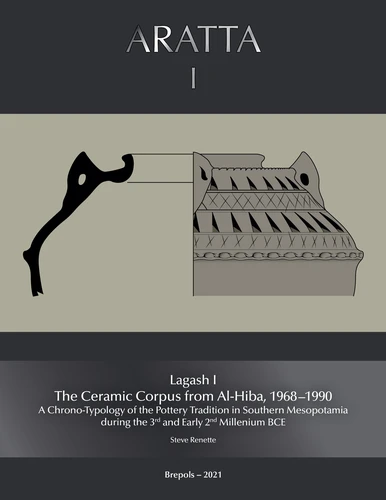
Lagash I: The Ceramic Corpus from Al-Hiba, 1968–1990. A Chrono-Typology of the Pottery Tradition in Southern Mesopotamia during the 3rd and Early 2nd Millenium BCE
Par :Formats :
- Paiement en ligne :
- Livraison à domicile ou en point Mondial Relay estimée à partir du 17 septembreCet article sera commandé chez un fournisseur et vous sera envoyé 25 jours après la date de votre commande.
- Retrait Click and Collect en magasin gratuit
- Nombre de pages450
- PrésentationBroché
- Poids1.81 kg
- Dimensions21,6 cm × 28,0 cm × 0,0 cm
- ISBN978-2-503-59020-2
- EAN9782503590202
- Date de parution18/10/2021
- CollectionARATTA
- ÉditeurBrepols
Résumé
Between 1968 and 1990, Donald P. Hansen and Vaughn E. Crawford directed six seasons of excavations at al-Hiba, the ancient Sumerian city-state Lagash. Overseen by Edward L. Ochsenschlager, the team documented one of the largest ceramic datasets from a southern Mesopotamian site spanning the entire third and the early second millennium BCE. With the availability of digital tools and relational database technology, the Al-Hiba Publication Project, led by Holly Pittman at the Penn Museum, can now analyze these results in preparation of final publication.
As a case-study in the difficulties of working with legacy data, the publication project also assesses how the original recording methodology structures and limits the interpretation of these datasets. This first volume of the Lagash publications presents the ceramic corpus organized in a chrono-typology that traces the development of the pottery tradition through the Early Dynastic, Akkadian, Ur III, and Isin-Larsa periods.
Often confirming well-established trends in general Mesopotamian ceramic development, this dataset from the south-eastern part of the Mesopotamian alluvium also introduces an underappreciated degree of regional variation.
As a case-study in the difficulties of working with legacy data, the publication project also assesses how the original recording methodology structures and limits the interpretation of these datasets. This first volume of the Lagash publications presents the ceramic corpus organized in a chrono-typology that traces the development of the pottery tradition through the Early Dynastic, Akkadian, Ur III, and Isin-Larsa periods.
Often confirming well-established trends in general Mesopotamian ceramic development, this dataset from the south-eastern part of the Mesopotamian alluvium also introduces an underappreciated degree of regional variation.