SOLDES
Jusqu'à -70% sur une sélection d'articles*


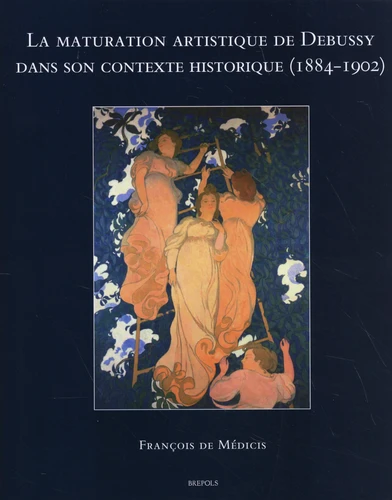
La maturation artistique de Debussy dans son contexte historique (1884-1902)
Par :Formats :
- Paiement en ligne :
- Livraison à domicile ou en point Mondial Relay estimée à partir du 13 novembreCet article sera commandé chez un fournisseur et vous sera envoyé 127 jours après la date de votre commande.
- Retrait Click and Collect en magasin gratuit
- Livraison à domicile ou en point Mondial Relay estimée à partir du 13 novembre
- Réservation en ligne avec paiement en magasin :
- Indisponible pour réserver et payer en magasin
- Nombre de pages813
- FormatGrand Format
- PrésentationRelié
- Poids2.085 kg
- Dimensions21,5 cm × 27,0 cm × 4,8 cm
- ISBN978-2-503-58950-3
- EAN9782503589503
- Date de parution01/01/2020
- CollectionSpeculum Musicae
- ÉditeurBrepols
Résumé
This work is centered on the figure of Claude Debussy in the years between 1884 and 1902 — from the moment he captured the Prix de Rome to the premiere of Pelléas et Mélisande, the work that marked his coming of age as a professional musician and confirmed his personal style. This period bore witness to one of the most profound transformations of the composer's musical style and the ascent of his career to dizzying heights.
Debussy's creative achievements are placed in the context of his professional development as well as his interactions with various musical institutions such as the Conservatoire, the Institut des Beaux-Arts (during the Prix de Rome), the Société Nationale de Musique, and the Opéra-Comique. Detailed and cursory analyses of a wide range of works, both canonical and little-known, provide a window on how Debussy's style was positioned with respect to other composers of his time who hailed from both the establishment and the avant-garde (Thomas, Massenet, Chabrier, Franck, D'Indy, Grieg, Wagner).
This study allows for a more nuanced understanding of our received knowledge and a refreshed historical perspective that begs us to reconsider various aspects of the artist's life. These include the cliché that Debussy was widely misunderstood in his youth, and a common failure to acknowledge the influence of Mussorgsky's fellow Russians, like Balakirev and Rimsky-Korsakov.
Debussy's creative achievements are placed in the context of his professional development as well as his interactions with various musical institutions such as the Conservatoire, the Institut des Beaux-Arts (during the Prix de Rome), the Société Nationale de Musique, and the Opéra-Comique. Detailed and cursory analyses of a wide range of works, both canonical and little-known, provide a window on how Debussy's style was positioned with respect to other composers of his time who hailed from both the establishment and the avant-garde (Thomas, Massenet, Chabrier, Franck, D'Indy, Grieg, Wagner).
This study allows for a more nuanced understanding of our received knowledge and a refreshed historical perspective that begs us to reconsider various aspects of the artist's life. These include the cliché that Debussy was widely misunderstood in his youth, and a common failure to acknowledge the influence of Mussorgsky's fellow Russians, like Balakirev and Rimsky-Korsakov.