
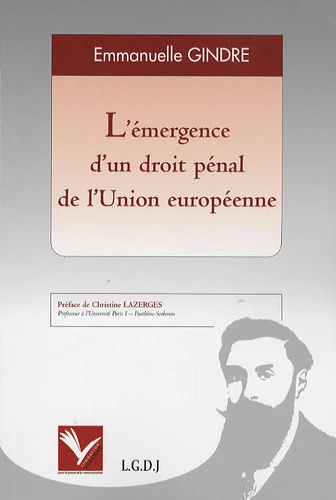
L'émergence d'un droit pénal de l'Union européenne
Par :Formats :
- Paiement en ligne :
- Livraison à domicile ou en point Mondial Relay estimée à partir du 3 décembreCet article sera commandé chez un fournisseur et vous sera envoyé 127 jours après la date de votre commande.
- Retrait Click and Collect en magasin gratuit
- Livraison à domicile ou en point Mondial Relay estimée à partir du 3 décembre
- Réservation en ligne avec paiement en magasin :
- Indisponible pour réserver et payer en magasin
- Nombre de pages524
- PrésentationBroché
- Poids0.875 kg
- Dimensions16,0 cm × 24,0 cm × 3,0 cm
- ISBN978-2-916606-30-9
- EAN9782916606309
- Date de parution05/01/2010
- CollectionCollection des Thèses
- ÉditeurFondation Varenne
- PréfacierChristine Lazerges
Résumé
L'évolution de la construction de l'Union européenne nous invite à renouveler le discours relatif à l'influence du droit communautaire sur le droit pénal, par l'étude des implications de l'harmonisation européenne en matière pénale. Il ne s'agit plus seulement aujourd'hui de mesurer les conséquences sur le droit pénal interne des normes communautaires intervenant dans les domaines de compétences transférés aux Communautés européennes, en termes de neutralisation des incriminations et des sanctions ou d'influence positive sur les obligations répressives des Etats membres.
Il s'agit désormais de mesurer l'ampleur juridique de l'édiction et de la transposition en droit interne de véritables normes pénales européennes. L'émergence de ce droit pénal de l'Union européenne nous interpelle sur la notion et le mécanisme de l'harmonisation, sur la normativité pénale de celle-ci, et sur la notion même de droit pénal traditionnellement liée à la souveraineté étatique et au territoire national.
The evolution of the construction of the European Union invites us to renew the analysis concerning the influence of community legislation on criminal laws, through the study of the implications of the harmonization of criminal affairs in Europe. Today, it is no longer a question of measuring the consequences on the internal criminal law of the community rules occurring in the fields of skills transferred to the European Communities, in terms of neutralization of the incriminations and penalties, or of the positive influence on the repressive obligations of Member States.
It is henceforth a question of measuring the legal scale of the enactment and the transposition in internal law of real European penal rules. The emergence of this European criminal law questions us on the notion and the mechanism of the harmonization, on the penal normativity of this, and on the notion of criminal law traditionally connected to the state sovereignty and to the national territory.
Emmanuelle Gindre est Professeur agrégée d'économie-gestion et conseillère technique au ministère de l'Environnement de la Polynésie française.
Il s'agit désormais de mesurer l'ampleur juridique de l'édiction et de la transposition en droit interne de véritables normes pénales européennes. L'émergence de ce droit pénal de l'Union européenne nous interpelle sur la notion et le mécanisme de l'harmonisation, sur la normativité pénale de celle-ci, et sur la notion même de droit pénal traditionnellement liée à la souveraineté étatique et au territoire national.
The evolution of the construction of the European Union invites us to renew the analysis concerning the influence of community legislation on criminal laws, through the study of the implications of the harmonization of criminal affairs in Europe. Today, it is no longer a question of measuring the consequences on the internal criminal law of the community rules occurring in the fields of skills transferred to the European Communities, in terms of neutralization of the incriminations and penalties, or of the positive influence on the repressive obligations of Member States.
It is henceforth a question of measuring the legal scale of the enactment and the transposition in internal law of real European penal rules. The emergence of this European criminal law questions us on the notion and the mechanism of the harmonization, on the penal normativity of this, and on the notion of criminal law traditionally connected to the state sovereignty and to the national territory.
Emmanuelle Gindre est Professeur agrégée d'économie-gestion et conseillère technique au ministère de l'Environnement de la Polynésie française.
A propos de Emmanuelle Gindre

La biodiversité partagée
E-book
19,99 €