

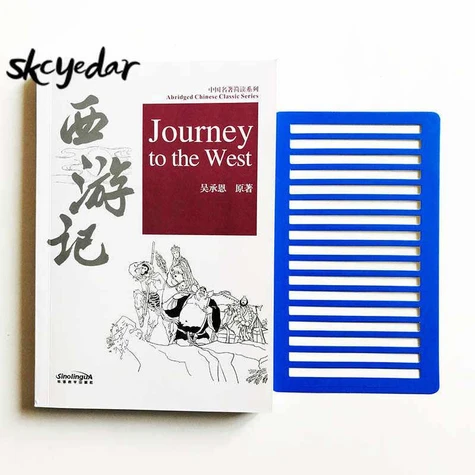
Journey to the West. Chinois avec Pinyin + notes Chinois - Anglais. Xiyou ji
Par :Formats :
- Nombre de pages270
- FormatGrand Format
- PrésentationBroché
- Poids0.38 kg
- Dimensions14,6 cm × 21,0 cm × 1,5 cm
- ISBN9787513813204
- EAN9787513813204
- Date de parution01/01/2017
- CollectionAbridged Chinese Classic Serie
- ÉditeurSinolingua
- Directeur de publicationPing Xin
- Directeur de publicationXinmeng Li
- Directeur de publicationXian Ma
Résumé
Journey to the West is one of China's four classic novels. It recounts how Master Xuanzang, together with his disciples Monkey King, Pig and Sandy, overcomes 81 tribulations on the way to West Heaven in pursuit of Buddhist scriptures. This book is an abridged version of the novel and contains 37 stories that are each approximately 1,500 characters in length or shorter. All the stories are limited to the 2,500 characters required by HSK Level 5.
By reading the classics, Chinese language learners can further improve their reading ability and get a better understanding of Chinese culture. In this book, each story is annotated with pinyin. A "pinyin-invisible card" is provided so that readers who want to read the stories without referring to pinyin can cover it.
By reading the classics, Chinese language learners can further improve their reading ability and get a better understanding of Chinese culture. In this book, each story is annotated with pinyin. A "pinyin-invisible card" is provided so that readers who want to read the stories without referring to pinyin can cover it.