
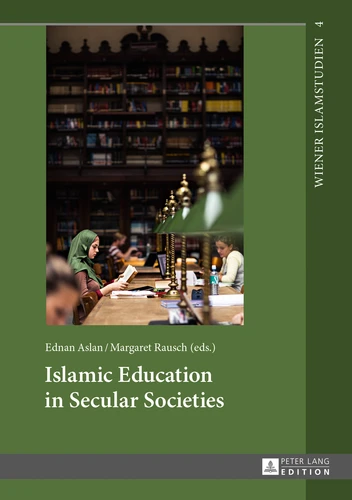
Islamic Education in Secular Societies. In Cooperation with Sedef Sertkan and Zsófia Windisch
Par : ,Formats :
- Paiement en ligne :
- Livraison à domicile ou en point Mondial Relay estimée à partir du 2 décembreCet article sera commandé chez un fournisseur et vous sera envoyé 127 jours après la date de votre commande.
- Retrait Click and Collect en magasin gratuit
- Livraison à domicile ou en point Mondial Relay estimée à partir du 2 décembre
- Réservation en ligne avec paiement en magasin :
- Indisponible pour réserver et payer en magasin
- Nombre de pages346
- ISBN978-3-631-64586-4
- EAN9783631645864
- Date de parution01/10/2013
- CollectionWiener Islamstudien
- ÉditeurPeter Lang
Résumé
Through history, Islam was the dominant religion and source of legitimation for ruling entities in diverse contexts where cultures and religions thrived in harmony. Today, the presence of Muslims as citizens in secular societies poses challenges, either by belonging to minorities in Western countries with long secular traditions or by comprising minority or majority populations in post-communist East European and Central Asian societies, where secular values are being revised.
As Muslims reconceive the role of religion in their lives in those contexts, Islamic education acquires importance. It assists the young, especially adolescents, in learning to identify more fully with local realities with the intention of building sense of inner connectedness through which they may truly take part in and be of service to society. The contributors to this volume explore how the religious and secular, as well as the traditional and modern intersect in Islamic educational institutions that benefit Muslims and their societies by averting extremism and promoting cohesion.
As Muslims reconceive the role of religion in their lives in those contexts, Islamic education acquires importance. It assists the young, especially adolescents, in learning to identify more fully with local realities with the intention of building sense of inner connectedness through which they may truly take part in and be of service to society. The contributors to this volume explore how the religious and secular, as well as the traditional and modern intersect in Islamic educational institutions that benefit Muslims and their societies by averting extremism and promoting cohesion.