
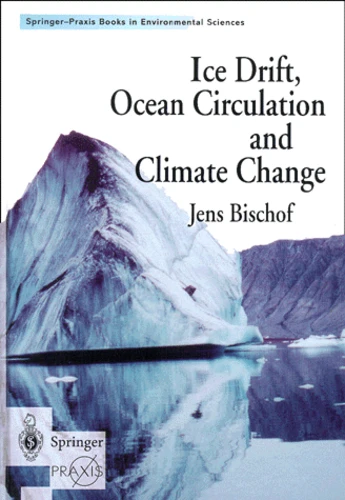
Ice Drift, Ocean Circulation and Climate Change
Par :Formats :
- Nombre de pages215
- PrésentationRelié
- Poids0.69 kg
- Dimensions17,3 cm × 24,5 cm × 2,1 cm
- ISBN1-85233-648-X
- EAN9781852336486
- Date de parution29/11/2000
- CollectionPraxis books in environmental
- ÉditeurSpringer
Résumé
The issue of global warming and climate change is of continuous concern. Since the 1970s, it bas been shown that the pack-ice around the Arctic Ocean is thinning, the margin of permafrost is moving north and the vegetation in the high northern parts of the world is changing (the 'greening' of the Arctic). But are these changes the result of human activity or simply regular variations of the Earth's climate system?
Over thousands of years, a continuous archive of iceberg and sea ice drift bas formed in the deep-sea sediments, revealing the place of the ice's origin and allowing a reconstruction of the surface currents and the climate of the past. However, the drift of floating ice from one place to another is not just a passive record of past ocean circulation. It actively influences and changes the surface ocean circulation, thus having a profound effect on climate change.
Ice Drift, Ocean Circulation and Climate Change is the first book to focus on the interactions between ice, the ocean and the atmosphere and to describe how these three components of the climate system influence each other. It makes clear the positive contribution of paleoclimatology and paleoceanography and should be read by anyone concerned with global warming and climate change.