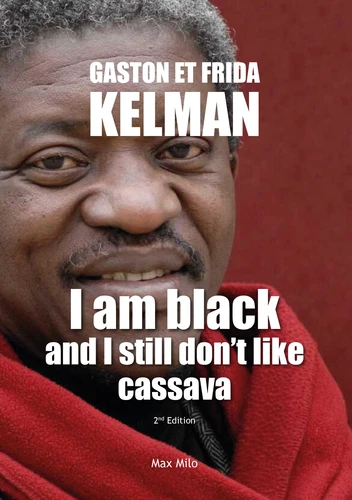
Identity is first and foremost about belonging to a place, not a color. I am black and I don't like cassava was a real literary sensation when it was published in 2004. It sold over 100, 000 copies in hardback and 200, 000 in paperback. Hundreds of readers queued up to have this essay signed. Twenty years later, Gaston Kelman and his daughter Frida (the heroine of the first book) revisit the condition of Black people in France.
I am Black and I still don't like cassava is an autobiographical and sociological essay in which the authors explore the complex realities of Black identity in France. Using everyday situations as a starting point, they dismantle prejudices, self-righteousness, and above all, the internal contradictions of a deeply "racialist" society. Gaston Kelman and his daughter assert their plural identity : being Black, French, Burgundian, executives, and citizens, without being eternally referred back to Africa or locked into the category of "immigrant.
" They describe the everyday, often unconscious, blunders that assign Black people to the realm of exoticism. They castigate the "good conscience" of white people and the victimhood complacency of some Black people. They denounce the invisible prejudices of French management and superficial tolerance. To those who confine them to their African origins, they respond that identity is first and foremost about belonging to a place, not a color.
They invite us to break the taboo and face the reality of diversity, without pretense or guilt, and to build a society where color is no longer a marker of otherness. With the rise of nationalism, communitarianism, and extremism, this book is a true lesson in universalism and humanism. Gaston Kelman is a RMC (Lien -> https : //fr. wikipedia. org/wiki/RMC) for many years. Frida Kelman, born in 1986, is the daughter of Gaston Kelman and the heroine of the first book, published in 2004.
Identity is first and foremost about belonging to a place, not a color. I am black and I don't like cassava was a real literary sensation when it was published in 2004. It sold over 100, 000 copies in hardback and 200, 000 in paperback. Hundreds of readers queued up to have this essay signed. Twenty years later, Gaston Kelman and his daughter Frida (the heroine of the first book) revisit the condition of Black people in France.
I am Black and I still don't like cassava is an autobiographical and sociological essay in which the authors explore the complex realities of Black identity in France. Using everyday situations as a starting point, they dismantle prejudices, self-righteousness, and above all, the internal contradictions of a deeply "racialist" society. Gaston Kelman and his daughter assert their plural identity : being Black, French, Burgundian, executives, and citizens, without being eternally referred back to Africa or locked into the category of "immigrant.
" They describe the everyday, often unconscious, blunders that assign Black people to the realm of exoticism. They castigate the "good conscience" of white people and the victimhood complacency of some Black people. They denounce the invisible prejudices of French management and superficial tolerance. To those who confine them to their African origins, they respond that identity is first and foremost about belonging to a place, not a color.
They invite us to break the taboo and face the reality of diversity, without pretense or guilt, and to build a society where color is no longer a marker of otherness. With the rise of nationalism, communitarianism, and extremism, this book is a true lesson in universalism and humanism. Gaston Kelman is a RMC (Lien -> https : //fr. wikipedia. org/wiki/RMC) for many years. Frida Kelman, born in 1986, is the daughter of Gaston Kelman and the heroine of the first book, published in 2004.