SOLDES
Jusqu'à -70% sur une sélection d'articles*


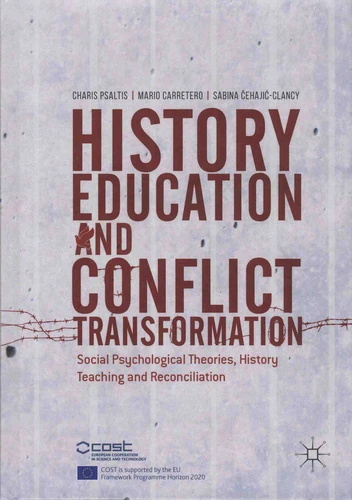
History Education and Conflict Transformation. Social Psychological Theories, History Teaching and Reconciliation
Par : , ,Formats :
- Paiement en ligne :
- Livraison à domicile ou en point Mondial Relay estimée à partir du 24 novembreCet article sera commandé chez un fournisseur et vous sera envoyé 127 jours après la date de votre commande.
- Retrait Click and Collect en magasin gratuit
- Livraison à domicile ou en point Mondial Relay estimée à partir du 24 novembre
- Réservation en ligne avec paiement en magasin :
- Indisponible pour réserver et payer en magasin
- Nombre de pages384
- FormatGrand Format
- PrésentationRelié
- Poids0.655 kg
- Dimensions15,5 cm × 21,7 cm × 2,7 cm
- ISBN978-3-319-54680-3
- EAN9783319546803
- Date de parution01/11/2017
- ÉditeurPalgrave MacMillan
Résumé
This volume discusses the effects, models and implications of history teaching in relation to conflict transformation and reconciliation from a social-psychological perspective. Bringing together a mix of established and young researchers and academics, from the fields of psychology, education, and history, the book provides an in-depth exploration of the role of historical narratives, history teaching, history textbooks and the work of civil society organizations in post-conflict societies undergoing reconciliation processes, and reflects on the state of the art at both the international and regional level.
As well as dealing with the question of the "perpetrator-victim" dynamic, the book also focuses on the particular context of transition in and out of cold war in Eastern Europe and the post-conflict settings of Northern Ireland, Israel and Palestine and Cyprus. It is also exploring the pedagogical classroom practices of history teaching and a critical comparison of various possible approaches taken in educational praxis.
The book will make compelling reading for students and researchers of education, history, sociology, peace and conflict studies and psychology.
As well as dealing with the question of the "perpetrator-victim" dynamic, the book also focuses on the particular context of transition in and out of cold war in Eastern Europe and the post-conflict settings of Northern Ireland, Israel and Palestine and Cyprus. It is also exploring the pedagogical classroom practices of history teaching and a critical comparison of various possible approaches taken in educational praxis.
The book will make compelling reading for students and researchers of education, history, sociology, peace and conflict studies and psychology.