
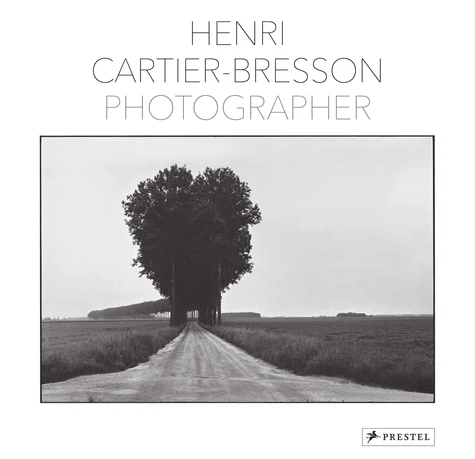
Henri Cartier-Bresson, born in 1908, began his career by studying painting before discovering photography in the early 1930s. In 1947 he founded the legendary cooperative agency Magnum Photos together with Robert Capa, David Seymour, William Vandivert and George Rodger. Cartier-Bresson left Magnum Photos in 1974 to devote himself to drawing and painting until his death in 2004. He is still considered one of the most important photographers of the twentieth century.
Henri Cartier-Bresson photographer
Par :Formats :
- Paiement en ligne :
- Livraison à domicile ou en point Mondial Relay estimée à partir du 2 octobreCet article sera commandé chez un fournisseur et vous sera envoyé 26 jours après la date de votre commande.
- Retrait Click and Collect en magasin gratuit
- Nombre de pages343
- FormatBeau Livre
- PrésentationRelié
- Poids2.71 kg
- Dimensions29,5 cm × 28,5 cm × 4,0 cm
- ISBN978-3-7913-8483-2
- EAN9783791384832
- Date de parution02/04/2020
- ÉditeurPrestel
- PréfacierYves Bonnefoy
Résumé
Henri Cartier-Bresson - Photographer, first published in 1979, is an essential book on this master of twentieth-century photography. Reproduced in beautiful duotone, the images range from Cartier-Bresson's earliest work in France, Spain and Mexico through his post-war travels in Asia, the United States and Russia, and even include landscapes from the 1970s, when he retired his camera to pursue drawing.
While his instinct for capturing what he called the "decisive moment" was unparalleled, as a photojournalist Cartier-Bresson was uniquely concerned with the human impact of historic occasions. In his photographs of the liberation of France from the Nazis, the death of Gandhi and the creation of the People's Republic of China in 1949, Cartier-Bresson focused on the reactions of the crowds rather than the subjects of the events.
And while his portraits of Sartre, Giacometti, Faulkner, Capote and other artists are iconic, he gave equal attention to those forgotten by history : a dead resistance fighter lying on the bank of the Rhine, children playing alongside the Berlin Wall and a eunuch in Beijing's Imperial Court. Accompanied by an insightful preface by the late French art historian and poet Yves Bonnefoy and divided into six thematic sections, this classic volume presents Cartier-Bresson's photographs in beautiful double-page spreads with brief captions.
Selected by the photographer himself, these profound images show how Cartier-Bresson was able to capture the decisive moment with extreme humility and profound humanity.
While his instinct for capturing what he called the "decisive moment" was unparalleled, as a photojournalist Cartier-Bresson was uniquely concerned with the human impact of historic occasions. In his photographs of the liberation of France from the Nazis, the death of Gandhi and the creation of the People's Republic of China in 1949, Cartier-Bresson focused on the reactions of the crowds rather than the subjects of the events.
And while his portraits of Sartre, Giacometti, Faulkner, Capote and other artists are iconic, he gave equal attention to those forgotten by history : a dead resistance fighter lying on the bank of the Rhine, children playing alongside the Berlin Wall and a eunuch in Beijing's Imperial Court. Accompanied by an insightful preface by the late French art historian and poet Yves Bonnefoy and divided into six thematic sections, this classic volume presents Cartier-Bresson's photographs in beautiful double-page spreads with brief captions.
Selected by the photographer himself, these profound images show how Cartier-Bresson was able to capture the decisive moment with extreme humility and profound humanity.
A propos de Henri Cartier-Bresson

14,50 €

Images à la sauvette
Grand Format
42,00 €

Sidonie Gabrielle Colette
Grand Format
29,90 €
Les Européens
Grand Format
42,00 €
Les anglais. The English
Beau Livre
42,00 €
6,88 €
Écrits sur l'art
E-book
10,99 €

La tauromachie
E-book
8,99 €


Diego Giacometti
E-book
7,49 €
Les défis du racing
E-book
6,99 €
Jean Paulhan
E-book
7,99 €
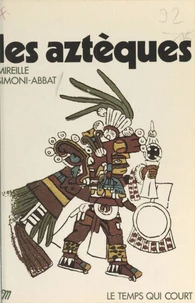
Les Aztèques
E-book
8,99 €

Japon
E-book
8,99 €
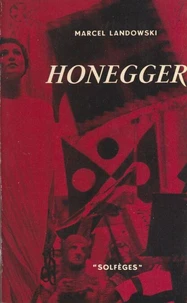
Honegger
E-book
7,99 €
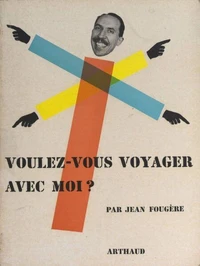
7,99 €