

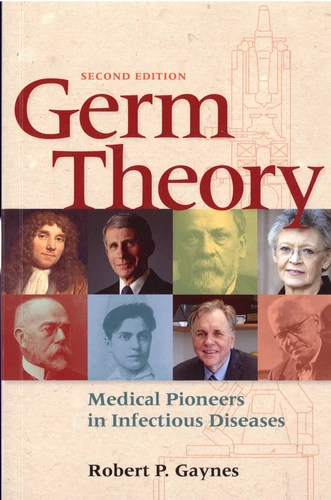
Germ Theory. Medical Pioneers in Infectious Diseases
2nd edition
Par : Formats :
- Paiement en ligne :
- Livraison à domicile ou en point Mondial Relay estimée à partir du 30 décembreCet article sera commandé chez un fournisseur et vous sera envoyé 127 jours après la date de votre commande.
- Retrait Click and Collect en magasin gratuit
- Nombre de pages360
- FormatGrand Format
- PrésentationBroché
- Poids0.644 kg
- Dimensions15,1 cm × 22,7 cm × 2,1 cm
- ISBN978-1-68367-376-7
- EAN9781683673767
- Date de parution27/04/2023
- ÉditeurASM Press
Résumé
From the ancient worlds of Hippocrates and Avicenna to the early 20th century hospitals of Paul Ehrlich and Lillian Wald to the modem-day laboratories of François Barré-Sinoussi and Barry Marshall, Germ Theory brings to life the inspiring stories of medical pioneers whose work helped change the very fabric of our understanding of how we think about and treat infectious diseases. In beautifully crafted narratives, author Robert Gaynes describes and presents compelling stories, including How Edward Selmer, the pioneer of vaccination, faced down scores of naysayers How a chance discovery led Louis Pasteur to the idea that the virulence of microbes can be altered How scientists in France, the Netherlands, and Denmark produced penicillin during World War 2 while keeping their efforts hidden from the Nazis The second edition features three new chapters based on interviews with Nobel.
Laureates François Barré-Sinoussi and Barry Marshall, and fanner NIAID Director and medical advisor to seven U.S. presidents Anthony Pauci, detailing fascinating accounts from their careers, including their groundbreaking work in the areas of IHV, peptic ulcers, and COVID-19, respectively.
Laureates François Barré-Sinoussi and Barry Marshall, and fanner NIAID Director and medical advisor to seven U.S. presidents Anthony Pauci, detailing fascinating accounts from their careers, including their groundbreaking work in the areas of IHV, peptic ulcers, and COVID-19, respectively.
L'éditeur en parle
Winner of a CHOICE Outstanding Academic litte award for its first edition, Germ Theory is required reading for anyone training or working in the field of infectious diseases or with an interest in microbes, the history of medicine, or how new discoveries can bring about paradigmatic shifts in thinking.